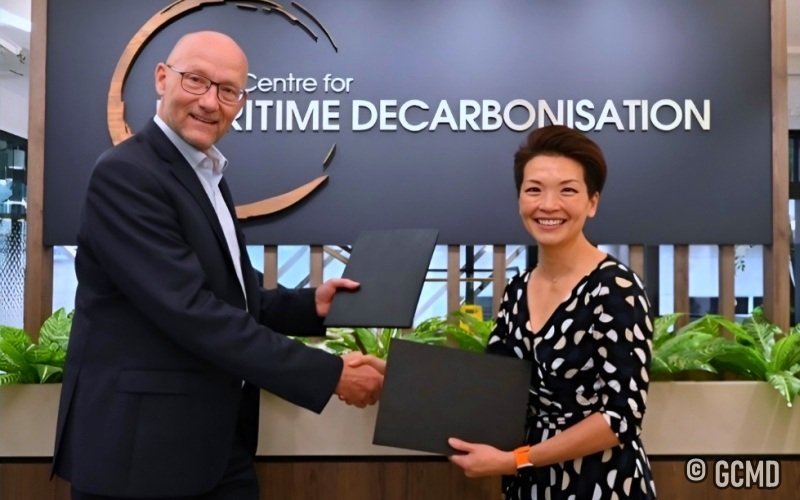
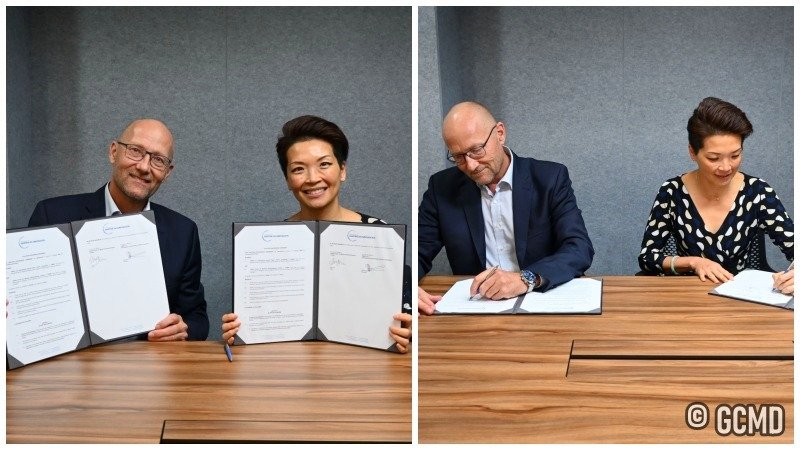
Singapore | February 3, 2026 – The Global Centre for Maritime Decarbonisation (GCMD) and CIMAC have officially signed a two-year Coalition partnership agreement, marking a significant step forward in the maritime sector’s transition to a low-carbon future.this alliance is designed to accelerate the maritime sector’s readiness for a multi-fuel future, focusing on the rigorous technical and safety standards required for the next generation of vessel propulsion.
The partnership arrives at a pivotal moment. With the first wave of ammonia-powered vessels slated to enter service later this year, the industry is racing to transition from “experimental” to “operational.” By combining GCMD’s “boots-on-the-deck” piloting experience with CIMAC’s unrivaled technical authority on engine development, the coalition aims to provide the industry with a definitive roadmap for decarbonization.
Table of Contents
The Symbiosis: Engineering Meets Operations
The core value of this partnership lies in its reciprocal nature. Decarbonization is not merely about finding a new fuel; it is about re-engineering the entire maritime ecosystem.
- Operational Intelligence to Standards: GCMD will funnel raw data and insights from its real-world pilots, including fuel bunkering, handling, and on-board consumption trials, directly into CIMAC’s technical working groups. This ensures that new global standards for engine performance and fuel quality are based on actual sea-trial evidence rather than theoretical models.
- Technical Validation for Trials: Conversely, GCMD will utilize CIMAC’s deep-domain expertise to ensure its future trials remain at the cutting edge of propulsion technology. As engine manufacturers (OEMs) adjust hardware for zero-carbon fuels, CIMAC’s guidance will ensure GCMD’s pilots are aligned with the latest fuel specifications and safety practices.
Navigating the “New Fuel” Chemistry
A significant portion of the partnership will focus on the unique challenges posed by nascent fuels like ammonia, hydrogen, and advanced biofuels. Unlike traditional VLSFO, these fuels introduce radical changes in chemical properties, toxicity, and energy density.
The coalition will specifically target:
- Hardware Evolution: Validating the durability of engine components against the corrosive or high-pressure nature of alternative fuels.
- Safety Protocols: Developing gold-standard safe handling procedures to protect crew and port infrastructure.
- Fuel Quality Frameworks: Establishing rigorous testing standards to ensure consistency across global bunkering hubs.
Leadership Perspectives
Professor Lynn Loo, CEO of GCMD, highlighted the necessity of this technical “bridge”:
“As alternative fuels introduce new chemistries and properties, solutions designed for today’s fuels will not automatically apply tomorrow. This partnership reflects our joint commitment to addressing these challenges through collaboration that is grounded in technical expertise and operational evidence.”
Rick Boom, President of CIMAC, emphasized the global regulatory impact:
“CIMAC collaborates closely with international partners to drive solutions for maritime transformation… Together, CIMAC and GCMD aim to deliver practical, forward-looking solutions that speed the transition to a cleaner, more sustainable future for shipping.”
Broadening the Regulatory Reach
The alliance extends beyond technical data; it is a strategic move to influence global policy. CIMAC holds consultative status at the International Maritime Organization (IMO), while GCMD maintains a vast network of upstream energy providers and downstream shipowners. By merging these networks, the two organizations are uniquely positioned to lobby for regulations that are both environmentally ambitious and technically feasible.
About CIMAC: The Global Authority on Maritime & Industrial Power
CIMAC (Conseil International des Machines à Combustion) is the world’s premier non-profit technical association dedicated to the advancement of large engines, ship propulsion, train drives, and power generation. Founded in 1950, it serves as the ultimate neutral forum for technical interchange among manufacturers, shipowners, component suppliers, oil companies, and scientists.
Today, CIMAC is more than just a combustion engine council; it is the leading architect of the maritime industry’s energy transition and digitalization strategy.
Why the Industry Follows CIMAC
Even for non-members and young professionals, CIMAC is a critical resource for navigating the future of the maritime and energy sectors:
- Regulatory Foresight: Understand complex international regulations (such as those from the IMO) long before they take effect.
- The Nexus of Strategy: Learn how cutting-edge technology, industrial capacity, and global policy interconnect to drive change.
- Neutral Technical Insights: Access expert analysis on future energy systems and engine performance without a commercial agenda.
- Global Networking: Gain an international perspective by engaging with a network of National Member Associations across America, Asia, and Europe.
Core Areas of Expertise
CIMAC provides a sophisticated platform for discussion and standardization across several high-tech domains:
- Propulsion Systems: Piston engines, gas turbines, and non-shaftline propulsion.
- Digitalization & Control: Automation, controls, and system integration.
- Decarbonization: Future fuel systems, greenhouse gas (GHG) reduction strategies, and emission controls.
- Standardization: Developing global fuel quality frameworks and hardware testing standards.
Empowering the Next Generation: CIMAC CASCADES
For students and young engineers, CIMAC hosts CASCADES, specialized seminars designed to inspire the next generation. These events allow young professionals to:
- Meet industry giants and experts from global OEMs.
- Refine presentation skills by sharing innovative research.
- Explore career paths in the rapidly evolving fields of green propulsion and maritime automation.
About the Global Centre for Maritime Decarbonisation – GCMD
The Global Centre for Maritime Decarbonisation (GCMD) was established as a non-profit organisation on 1 August 2021 with a mission to support the decarbonisation of the maritime industry by shaping standards, deploying solutions, financing projects, and fostering collaboration across sectors.
- Founders: BHP, BW Group, Eastern Pacific Shipping, Foundation Det Norske Veritas, Ocean Network Express and Seatrium.
- Funding: GCMD receives funding from the Maritime and Port Authority of Singapore (MPA) for qualifying research and development programmes and projects.
- Strategic Partners: bp, Hanwha Ocean, Hapag-Lloyd, NYK Line and PSA International have joined as Strategic partners.
- Initiatives: GCMD has launched key initiatives to close technical and operational gaps in: deploying ammonia as a marine fuel, developing an assurance framework for drop-in green fuels, unlocking the carbon value chain, and closing the data-financing gap for energy efficiency technologies.
- Location: Strategically located in Singapore, the world’s largest bunkering hub and busiest transshipment port.
Source: Global Centre for Maritime Decarbonisation