
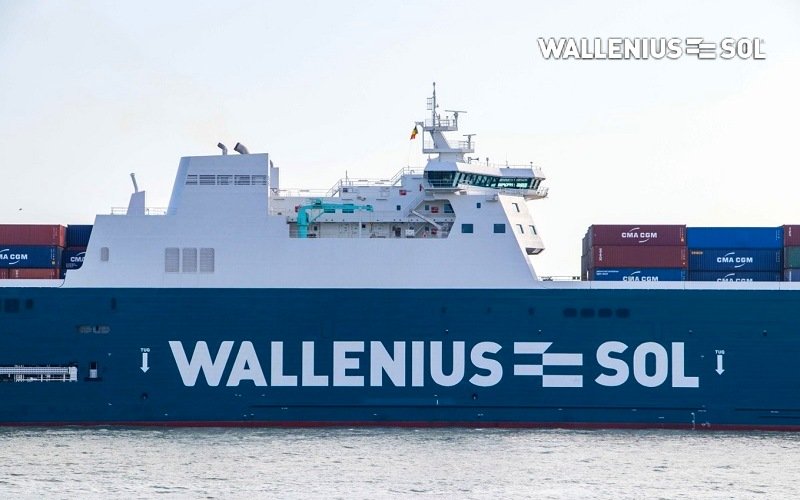
Wallenius SOL has shifted one vessel to Advanced FAME (B100) biofuel and is extending the practice to its B-Class fleet, backed by consistent bunkering operations in Terneuzen. The transition directly cuts well-to-wake greenhouse gas intensity while generating a valuable compliance surplus under the EU’s FuelEU Maritime regulation. The company is leveraging regulatory flexibility mechanisms, including pooling, banking, and borrowing, to support the broader compliance pathway and decarbonization of its wider fleet.
Göteborg, Sweden | September 1, 2026 – As the regulatory landscape under FuelEU Maritime continues to reshape operational frameworks for European shipping, Wallenius SOL is accelerating its sustainability initiatives. Building on compliance adjustments introduced in January 2025, the specialized shipping company has successfully transitioned one of its vessels to Advanced FAME (B100) biofuel and is actively expanding the initiative across its designated B-Class vessels.
Supported by regular biofuel bunkering operations in Terneuzen, the strategic move underscores how maritime operators are leveraging drop-in renewable fuels and compliance flexibilities to meet tightening well-to-wake greenhouse gas (GHG) intensity targets.
Operational Integration and Fuel Strategy
The implementation of FuelEU Maritime sets progressively stricter limits on the greenhouse gas intensity of energy used by ships calling at European Union ports. To address these standards proactively, Wallenius SOL has integrated Advanced FAME (fatty acid methyl esters) at a B100 concentration into select operations.
Key elements of the rollout include:
- Targeted B-Class Expansion: Following the successful conversion of an initial vessel, the company is scaling the B100 approach across its broader B-Class vessel segments.
- Reliable Bunkering Hubs: The transition is heavily anchored by regular, reliable biofuel deliveries secured at Terneuzen, ensuring a stable supply chain for ongoing regional schedules.
- Direct GHG Reductions: Replacing standard conventional marine fuels with certified biofuel directly lowers the well-to-wake carbon footprint of the energy consumed on board.
Harnessing FuelEU Flexibility Mechanisms
Beyond immediate carbon reduction on individual ships, Wallenius SOL is utilizing the structural flexibility mechanisms built into the FuelEU Maritime regulation to optimize compliance for its entire fleet.
By adopting high-blend biofuels, the company generates a compliance surplus. Through regulatory mechanisms such as pooling, banking, and borrowing, this surplus can be strategically allocated to support the compliance trajectory of other vessels within the wider fleet that may still be transitioning.
Rather than viewing the regulation merely as a compliance hurdle, Wallenius SOL’s approach demonstrates how operators can utilize regulatory provisions to accelerate the large-scale adoption of alternative marine fuels.
ABOUT WALLENIUS SOL
WALLENIUS SOL is an innovative shipping company with the mission to enable truly sustainable logistics in Northern Europe. With a modern, ice-classed, multi-fuel fleet and a liner network connecting the Bay of Bothnia with key ports across Northern Europe, the company is committed to building long-term, resilient maritime infrastructure for the region’s industries. WALLENIUS SOL targets 100% renewable fuel operations by 2035 and zero harmful environmental impact by 2045.
Source: Wallenius SOL