
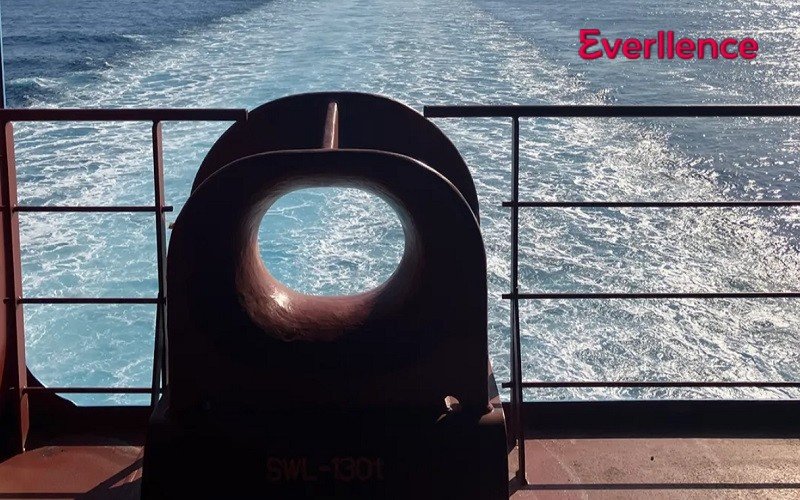
Everllence has launched Engine Supported Air Lubrication (ESAL), an innovative technology that combines hull air-lubrication with main engine integration to boost vessel propulsion efficiency by up to 6%. Backed by a new industry white paper and successful onboard trials, the system offers a practical solution to reduce fuel consumption, emissions, and regulatory exposure. By cutting energy demand, ESAL provides a future-proof, cost-saving strategy that enhances operational competitiveness and advances maritime decarbonization.
Copenhagen | September 2, 2026 – Engine technology leader Everllence has officially announced the launch of a pioneering technology: Engine Supported Air Lubrication (ESAL). Alongside the introduction, the company released a comprehensive industry white paper titled “A leap in vessel energy efficiency advancement with engine-supported air lubrication,” which underscores why optimizing energy efficiency serves as a crucial first step in shipping’s net-zero transition.
Integrating Hull Air-Lubrication with Main Engines
ESAL is designed as a practical, future-proof solution that cuts fuel consumption, dampens regulatory exposure, and elevates overall vessel propulsion efficiency by up to 6%. The technology uniquely integrates hull air-lubrication systems with compressed air directly from the main engine, generating immediate operational value regardless of future fuel shifts or evolving regulatory frameworks.
Everllence emphasizes that efficiency improvements are not an alternative to fuel transitions, but rather an essential prerequisite for making the transition economically viable.
“The maritime energy transition must begin with reducing energy demand,” stated Bjarne Foldager, Head of Two-Stroke Business at Everllence. “Solutions that improve efficiency today will retain their value under any credible future framework. Efficiency improvements are therefore not an alternative to the transition of fuel but a prerequisite for making it feasible.”
Strategic Response to Regulatory Uncertainty and Volatility
Anticipating final International Maritime Organization (IMO) rules, Everllence stresses that ESAL already presents an airtight business case. By curbing a vessel’s overall fuel consumption, the technology drives down absolute emissions, lowers compliance costs, and mitigates exposure to severe fuel-price and regulatory fluctuations.
These compounding fuel savings translate into long-term economic and environmental benefits spanning the entire operating lifecycle of a vessel.
“Less fuel consumed leads directly to lower absolute emissions, lower compliance costs, and lower exposure to volatility in both fuel prices and regulatory costs,” noted Per Cato, SVP and Head of Engineering Two-Stroke at Everllence. “ESAL is therefore not only a technology but a strategic response to uncertainty in the regulatory landscape. We are confident in both the technology and the efficiency improvements delivered by ESAL, having successfully conducted multiple onboard trials across several vessels.”
Driving the Net-Zero Journey
Backed by successful onboard trials across several ships, Everllence concludes that enhancing energy efficiency remains non-negotiable for maritime decarbonization. By coupling hull air lubrication with main engine integration, ESAL successfully slashes fuel demand, minimizes emissions, and bolsters the commercial competitiveness of shipowners navigating the road to net-zero.
About Everllence
Headquartered in Germany, Everllence is a global leader in marine propulsion, decarbonization, and industrial energy systems. The company employs 15,000 people across more than 140 sites globally. Its extensive portfolio includes advanced dual-fuel engines, climate-neutral fuel retrofits, carbon capture systems, industrial heat pumps, and large-scale green hydrogen technologies through its subsidiary Quest One. Global after-sales support is managed via its dedicated service arm, Everllence PrimeServ.
Source: Everllence