
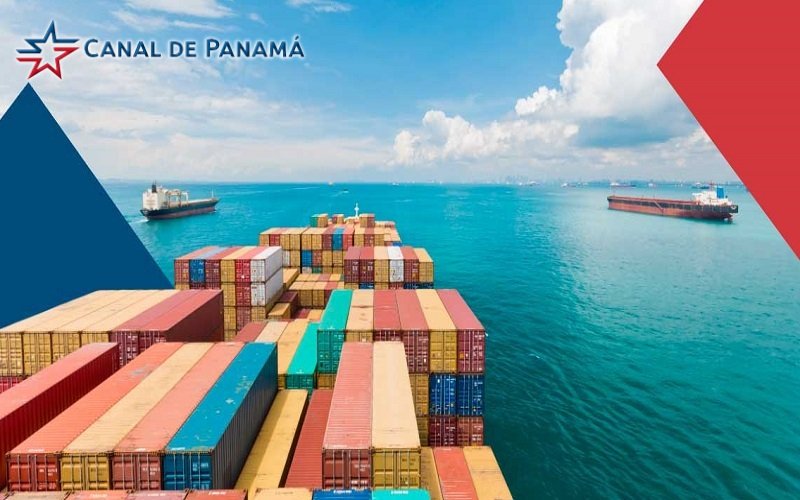
Responding to ongoing rainfall deficits from an active El Niño event, the Panama Canal Authority has announced a reduction in daily transit slots to 9 for Neopanamax and down to 23 for Panamax locks, alongside a restructuring of auction groups. However, due to current water conditions in Gatun Lake, the authority has temporarily postponed upcoming maximum draft restrictions to September 2 and October 1, 2026. These synchronized adjustments aim to balance water conservation with equitable market access, though unreserved vessels still face heightened risks of extended queue delays.
Panama | August 20, 2026 – In a decisive shift responding to severe rainfall deficits across its watershed, the Panama Canal Authority (ACP) has issued an emergency advisory introducing sweeping temporary modifications to transit capacities, slot allocations, and auction groups.
Crucially, while transit slot caps are tightening, incoming hydrological relief has allowed the authority to postpone upcoming maximum draft restrictions.
Key Transit and Slot Adjustments at a Glance
- Neopanamax Lock Caps: Capped at 9 daily slots starting September 4, 2026.
- Panamax Lock Caps: Set to 25 daily slots on September 3, stepping down further to 23 daily slots on September 15, 2026.
- Draft Restrictions Postponed:
- The 48.0 ft (14.63 m) limit previously set for August 26 is moved to September 2, 2026.
- The 47.5 ft (14.48 m) limit previously set for September 3 is moved to October 1, 2026.
Watershed Pressures Drive Slot Cuts
Despite the official arrival of the wet season, rainfall in the canal’s watershed from May through August has tracked 34% below the historical average, with inflows into Gatun and Alajuela lakes lagging 44% below normal. With long-term forecasts pointing to a persistent El Niño event threatening the upcoming 2027 dry season, the ACP has stepped in to protect baseline water reserves.
Beginning September 4, total daily transits will contract to 34 slots, falling to 32 slots on September 15. The reductions will directly impact vessel queue lengths, with the ACP warning that unreserved ships arriving at the waterway face significantly extended waiting times. Confirmed bookings via the Transit Reservation System remain the only absolute guarantee for transit dates.
Overhauling the Daily Auction Market Structure
To foster an equitable allocation process reflective of global trade dynamics, the ACP is restructuring daily auction slots into four distinct market categories:
| Auction Group | Market Segments Included |
| Group 1 | LNG and LPG Carriers |
| Group 2 | Dry Bulk Carriers, General Cargo, and Others |
| Group 3 | Container Vessels, Vehicle Carriers / RoRo, and Refrigerated Vessels |
| Group 4 | Chemical Tankers, Crude Oil, and Product Tankers |
To maximize efficiency, operators holding existing slots through LoTSA, NetZero, or standard allocations cannot secure parallel slots via auctions unless zero competing demand exists. Furthermore, fully laden Neopanamax container ships boasting the highest TEU capacities will enjoy priority allocation status, using customer rankings as a tiebreaker.
Strategic Implications for Bunker and Shipping Operations
For bunker suppliers and shipowners, the shifting regulatory landscape requires tight operational agility. While the temporary postponement of the 48-foot and 47.5-foot draft caps offers a brief reprieve for cargo payloads through September, tightening slot availability combined with global geopolitical chokepoint pressures will force fleet operators to closely weigh voyage economics.
The ACP has underscored that it will maintain transparent, rapid communication regarding future adjustments as weather tracking data evolves.
About the Panama Canal
The Panama Canal, an engineering marvel spanning approximately 80 kilometers between the Atlantic and Pacific Oceans, is a vital link between North and South America. Built in one of the continent’s narrowest stretches, the Canal plays a key role in facilitating global maritime trade through its sophisticated system of locks.
The Canal’s locks, Gatun, Pedro Miguel, and Miraflores, function as water lifts, raising ships from sea level to the level of Gatun Lake, which sits 26 meters above sea level. The lock chambers measure 33.53 meters wide by 304.8 meters long, accommodating vessels up to 32.3 meters in width, with a draft of up to 12 meters in tropical fresh water, and a length of up to 294.1 meters.
Water for the locks is drawn from Gatun Lake, using gravity to move ships between different elevations. The Canal’s narrowest section, the Culebra Cut, stretches 13.7 kilometers from the Pedro Miguel Locks to Gatun Lake, carved through rock and limestone.
Annually, the Panama Canal facilitates the passage of between 13,000 and 14,000 ships, connecting over 180 maritime routes and serving more than 1,920 ports in 170 countries. The Canal operates 24/7 year-round, supported by a dedicated workforce of approximately 9,000 employees, ensuring seamless transit services for offshore and global maritime traffic.
Source: Autoridad Marítima de Panamá