
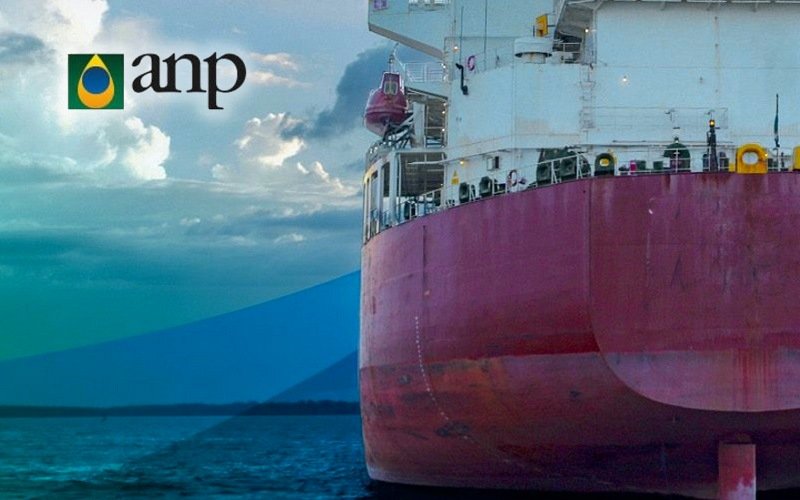
Brazil’s ANP has launched a 45-day public consultation to revise marine fuel regulations, aligning domestic standards with the ISO 8217:2024 framework and IMO decarbonization targets. The proposal introduces structural updates for high-blend biodiesels, drop-in synthetic fuels, and pathways for zero-emission alternatives like green hydrogen, methanol, and LNG.
Rio de Janeiro, Brazil | July 24, 2026 – In a decisive step toward modernizing Brazil’s bunkering landscape, the board of the National Agency of Petroleum, Natural Gas and Biofuels (ANP) has approved a 45-day public consultation and public hearing process regarding the comprehensive revision of ANP Resolution No. 903/2022.
The landmark regulatory initiative aims to overhaul the specifications governing marine fuels commercialized throughout national territory, spanning marine diesel and marine fuel oils, while aggressively steering the domestic market toward global technical harmonization, technological innovation, and net-zero maritime targets.
Key Drivers: ISO 8217 and Global Decarbonization
The proposed regulatory update is engineered to bridge the gap between Brazilian standards and the world’s most rigorous international benchmarks, chief among them the 7th edition of the ISO 8217 standard, published in 2024.
Against the backdrop of the International Maritime Organization’s (IMO) ambitious decarbonization strategy, the overhaul directly addresses structural shifts within the global marine fuel matrix. By accommodating next-generation marine energy carriers, the ANP seeks to ensure that Brazilian bunkering infrastructure remains competitive, reliable, and fully compliant with evolving shipowner requirements.
Core Pillars of the Proposed Resolution
The draft text introduces several structural transformations to the country’s downstream marine framework:
- Restructured Specification Tables: Integration of dedicated fuel classes explicitly tailored to accommodate various levels of biodiesel blending.
- Selective Parameter Adoption: Implementation of updated limits and testing methodologies drawn directly from ISO 8217:2024.
- Full Biodiesel Integration: Legal recognition of biodiesel up to 100% concentrations (B100) for regular marine application, maintaining the voluntary nature of renewable component additions for suppliers.
- Drop-In Green Fuels: Formal regulatory classification for green diesel and synthetic fuels as “drop-in” alternatives, chemically identical or highly similar to conventional fossil equivalents, allowing seamless utilization without modifications to shipboard engines or existing supply logistics.
- Streamlined Supply Chains: Clear definitions regarding authorized blending agents, alongside provisions enabling direct commercialization of B100 to corporate entities for self-consumption in vessel operations.
- Heightened Quality Assurance: Upgraded protocols for quality control, documentary traceability, sampling, certification, and fuel identification, strictly aligned with Annex VI of the MARPOL Convention.
Opening the Door to Zero-Emission Alternatives
Recognizing the accelerated pace of the global energy transition, the ANP’s proposal introduces forward-looking flexibility for alternative energy vectors currently expanding across international shipping lanes.
The framework establishes a pathway for ANP prior authorization, operating on an experimental basis, to trial alternative marine fuels not yet fully standardized under ISO 8217, such as methanol, ethanol, ammonia, and hydrogen.
Furthermore, the proposal incorporates a specialized regulatory treatment for Liquefied Natural Gas (LNG). Given the maturity of international LNG bunkering codes balanced against the nascent stage of national distribution infrastructure, LNG commercialization will proceed via prior agency authorization.
Next Steps and Industry Engagement
Prior to launching the formal public participation phase, the ANP coordinated extensively with governmental stakeholders and industry associations, integrating vital sector feedback into the draft. The proposal has also undergone rigorous internal technical evaluations and a formal legal review by the Federal Prosecutor’s Office attached to the agency.
With the opening of the 45-day public consultation window, shipowners, bunker suppliers, traders, and technology providers now have a critical opportunity to shape the future of marine propulsion and fuel compliance in Brazilian waters.
About ANP (National Agency of Petroleum, Natural Gas and Biofuels)
The National Agency of Petroleum, Natural Gas and Biofuels (ANP) is the federal regulatory body linked to Brazil’s Ministry of Mines and Energy, responsible for overseeing the entire oil, natural gas, and biofuels supply chain. Established in 1997, ANP formulates and enforces technical regulations, oversees fuel quality and market compliance, and steers national energy policies to ensure a reliable fuel supply and foster sustainable sector growth. (Agência Nacional do Petróleo, Gás Natural e Biocombustíveis)
Source: ANP