The Global Centre for Maritime Decarbonisation (GCMD) and Equinor have launched a five-year Impact partnership to address critical technical, operational, and commercial gaps in scaling alternative marine fuels. By combining GCMD’s real-world maritime piloting capabilities with Equinor’s extensive expertise as an energy provider and vessel charterer, the alliance will tackle safe bunkering practices and robust monitoring frameworks. Furthermore, the collaboration will leverage Equinor’s pioneering carbon capture experience, such as the Northern Lights storage project, to accelerate the deployment of onboard carbon capture and energy efficiency technologies across the global fleet.
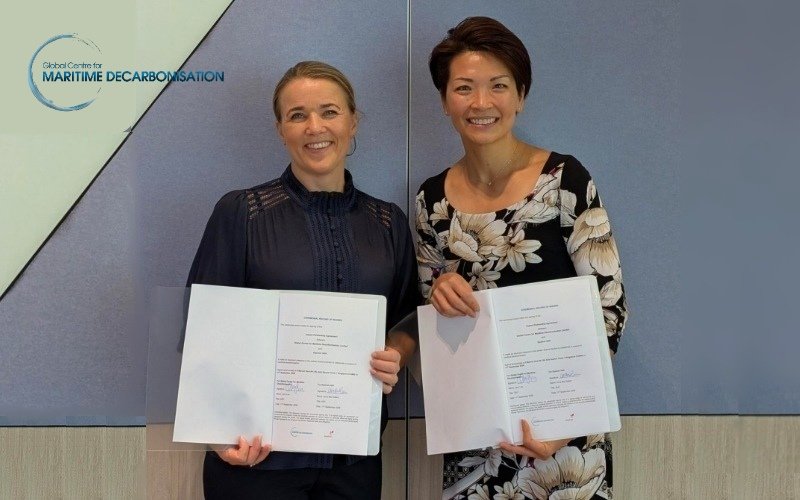
Singapore | September 22, 2026 | In a move set to accelerate shipping’s green transition, the Global Centre for Maritime Decarbonisation (GCMD) and energy major Equinor have announced a strategic five-year Impact partnership.
The collaboration unites GCMD’s proven framework for executing real-world maritime pilots with Equinor’s extensive footprint as a global vessel charterer, multi-energy provider, and pioneer in low-carbon technologies. Together, the two entities aim to bridge critical technical, operational, and commercial gaps standing in the way of scaling alternative marine fuels and broader decarbonisation infrastructure.
Tackling Alternative Fuels: From Safe Bunkering to Robust Assurance
As maritime stakeholders search for viable pathways away from conventional bunker fuels, the partnership will heavily target operational hurdles associated with next-generation energy carriers such as biofuels, ammonia, and methanol.
GCMD brings to the table its extensive baseline work focusing on two main pillars of deployment:
- Operational Safety: Generating empirical data to draft safe handling and bunkering guidelines for toxic or highly volatile alternative fuels.
- Robust MRV: Strengthening monitoring, reporting, and verification mechanisms to instill market confidence in fuel quantity, quality, and lifecycle greenhouse gas (GHG) emissions abatement.
Equinor complements these research capabilities with hands-on industry experience. As both a marine fuel supplier and a vessel charterer managing dual-fuel LNG, LPG, and methanol tankers, Equinor is actively involved in testing biofuels, supplying methanol, and pioneering the use and supply of ammonia as a marine fuel, including laying down groundwork for associated regulatory and bunkering frameworks.
Scaling Fleet Decarbonisation and Carbon Value Chains
Beyond alternative molecules, the five-year pact will address solutions designed to decarbonize the existing maritime fleet, casting a wide net over Energy Efficiency Technologies (EETs) and Onboard Carbon Capture and Storage (OCCS).
- Energy Efficiency: Building on GCMD’s initiatives, such as quantifying real-world fuel savings from wind-assisted propulsion systems and engineering financial mechanisms to scale adoption.
- Carbon Capture: Leveraging milestones like GCMD’s Project CAPTURED, which successfully proved an end-to-end value chain for onboard liquefied CO₂, paving the way for regulatory recognition under the EU ETS and IMO framework support for permanent carbon mineralisation.
Equinor injects decades of heavy-hitting offshore carbon management expertise into this pillar. Notably, Equinor is a prime developer and operator of Northern Lights, the world’s pioneer cross-border CO₂ transport and storage facility, where ship-transported liquefied CO₂ is offloaded at an onshore terminal and piped for permanent geological storage deep beneath the North Sea.
Leadership Perspectives
Professor Lynn Loo, CEO of GCMD, underscored the pragmatism required to transition shipping from conceptual frameworks to widespread adoption:
“Shipping’s transition will require a portfolio of decarbonisation solutions, and moving them from promising concepts and demonstrations to adoption at scale requires us to address the practical barriers that remain. GCMD is proud to join forces with Equinor to generate the operational evidence needed to close these gaps and build confidence in solutions that can deliver meaningful emissions reductions.”
Echoing this sentiment, Anne Mai Hatlem, Senior Vice President for Marketing, Midstream & Processing (MMP) at Equinor, emphasized the necessity of cross-sector alignment:
“The maritime energy transition requires collaboration across industries and value chains, and we’re excited to join GCMD as an Impact partner. Equinor brings expertise and practical experience from across the energy and maritime sectors, and we look forward to working with and learning from other industry partners. Together, we can help address barriers, improve understanding of emerging solutions and support progress towards lower-emission shipping.”
By pairing rigorous field trials with industrial muscle, the GCMD-Equinor alliance aims to deliver actionable, transparent blueprints that bunkering hubs, shipowners, and energy providers can utilize to de-risk maritime decarbonisation over the next half-decade.
About Equinor
Equinor is an international energy company headquartered in Norway and a major energy supplier to Europe. The company’s diverse portfolio spans oil and gas, renewables, and pioneering low-carbon solutions, driving innovation across traditional and emerging energy value chains.
About the Global Centre for Maritime Decarbonisation (GCMD)
The Global Centre for Maritime Decarbonisation (GCMD) is an international, independent action tank established on August 1, 2021, to help the global shipping industry decarbonise through real-world pilots and trials. Its mission is driven by four strategic pillars: shaping standards, deploying solutions, financing projects, and fostering cross-sector collaboration.
Founded with foundational industry support and funding from the Maritime and Port Authority of Singapore (MPA) for qualifying research and development programmes, GCMD has expanded its ecosystem to include more than 130 centre- and project-level partners. These stakeholders contribute vital funds, expertise, and in-kind support to pilot, accelerate, and scale decarbonisation solutions.
GCMD currently spearheads key initiatives addressing critical technical and operational gaps across several areas: enabling ammonia as a marine fuel, developing an assurance framework for drop-in green fuels, unlocking carbon value chains through onboard carbon capture and permanent storage, and bridging the data-financing gap to scale energy efficiency technologies. Strategically headquartered in Singapore, GCMD operates from the world’s premier bunkering hub and busiest transshipment port.
Source: GCMD