
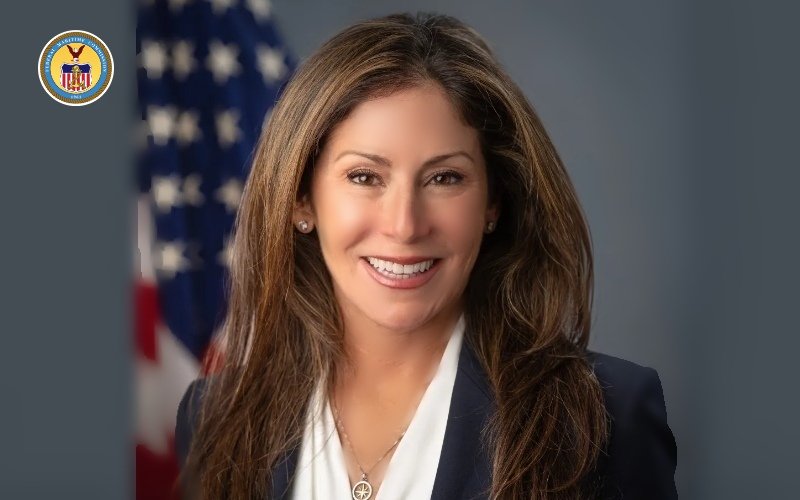
U.S. Federal Maritime Commission (FMC) Commissioner Laura DiBella has critiqued the IMO’s proposed Net-Zero Framework, arguing that rigid regulations and limited fuel options risk causing severe cost spikes and supply bottlenecks. She emphasizes that any viable decarbonization roadmap must rely on market forces and incorporate a wide range of alternative marine fuels, specifically championing LNG and bio-LNG. Furthermore, DiBella highlights that utilizing America’s expanding LNG export capacity and existing bunkering infrastructure can sustainably power the global maritime transition toward 2050.
Washington | August 20, 2026 – Laura DiBella, Chairman of the U.S. Federal Maritime Commission (FMC), has shared a thoughtful perspective on the International Maritime Organization’s (IMO) proposed Net-Zero Framework (NZF), encouraging a careful evaluation of the current regulatory approach to help prevent potential supply bottlenecks, increased operating costs, and consumer price pressures.
Given that the global maritime industry relies heavily on marine fuels, bunkering infrastructure, and energy transition pathways, Commissioner DiBella’s policy intervention directly impacts fuel suppliers, shipowners, and bunker traders navigating the road to 2050.
Why This Story Matters for Your Bunkering Audience
As a dedicated bunkering and marine energy news platform, covering this statement is essential for your readers. The IMO’s Net-Zero Framework serves as the primary regulatory blueprint governing future marine fuel standards.
Commissioner DiBella’s statement highlights critical friction points between top-down regulatory mandates and practical bunkering market realities:
- Protection of Transitional Fuels: DiBella stresses that any viable decarbonization framework must preserve the widest possible range of alternate fuel sources, specifically highlighting LNG and bio-LNG, which she notes could realistically supply over 60% of global maritime fuel by 2050.
- The Danger of Artificial Constraints: The critique warns that attempting to regulate shipping away from the global petroleum system via rigid mandates rather than market forces will compromise fuel availability, stability, and reliability.
- Leveraging Existing Bunkering Infrastructure: A core argument centers on bio-LNG’s ability to utilize existing global LNG supply chains and bunkering networks, avoiding the capital-intensive construction of an entirely new fuel ecosystem.
- The U.S. Energy Advantage: Highlighting the United States as the world’s leading LNG exporter, with capacity projected to double by 2030, DiBella calls for American-made bio-LNG to be officially recognized as a qualifying compliance fuel.
Core Arguments from the Statement
- Market Forces vs. Regulation: DiBella argues that the resilience of the current petroleum-based system stems from a diverse network of suppliers, refineries, and distribution channels. Artificially limiting alternative fuel options could paralyze adoption.
- Viability Over Rigid Deadlines: Emissions reduction milestones, in her view, must be tied explicitly to demonstrated market viability, affordability, and global scalability rather than fixed implementation dates.
- Dispelling Price Myths: Addressing concerns that bio-LNG will inevitably inflate in costs due to high demand, DiBella points out that dynamic energy markets scale supply alongside long-term demand certainty unlocked by smart regulatory design.
Note: While Commissioner DiBella is a high-ranking official with the U.S. FMC, the perspectives shared in the statement reflect her personal expert analysis and do not formally represent the official consensus of the full Commission.
Chairman Laura DiBella
Federal Maritime Commission (FMC) Chairman Laura DiBella brings extensive public sector leadership and deep maritime industry expertise to her role, having been nominated by President Trump, confirmed by the U.S. Senate, and designated as Chairman in early 2026. Before joining the FMC, she served as Florida’s first female Secretary of Commerce, managed key economic development initiatives, and built a robust maritime background as the first full-time Executive Director of the Port of Fernandina. A University of Florida graduate and accomplished marathon runner, Chairman DiBella combines her executive leadership in state commerce with hands-on experience navigating seaport operations and maritime logistics policy.
About Federal Maritime Commission (FMC)
Established in 1961 and tracing its roots back to World War I, the Federal Maritime Commission (FMC) is the independent federal agency tasked with regulating the U.S. international ocean transportation system to protect exporters, importers, and consumers. Operating under core legislation such as the Ocean Shipping Reform Act of 2022, the FMC ensures a competitive, reliable supply chain by monitoring carrier agreements, reviewing service contracts, resolving trade disputes, and licensing ocean transportation intermediaries. Through these oversight powers, the agency safeguards the integrity of U.S. maritime commerce against unfair practices and uncompetitive behavior.
Source: FMC