
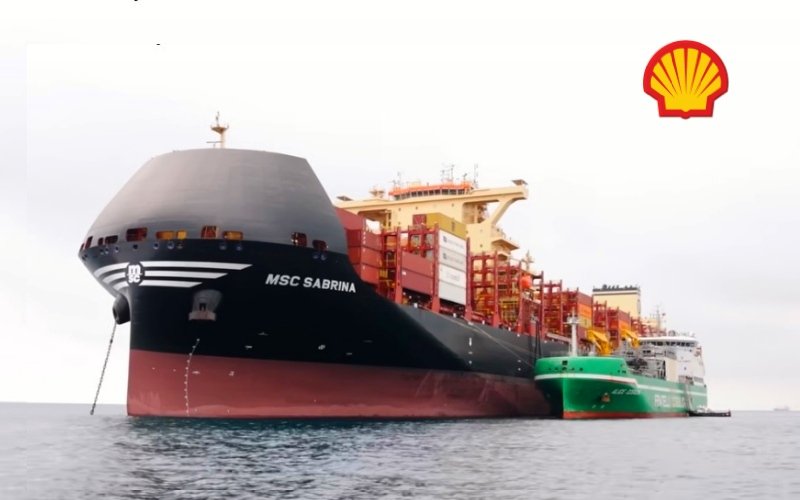
Shell Marine has completed its maiden LNG bunkering operation at the Port of Valencia, expanding its world-leading network to 28 locations across 13 countries. This strategic addition enhances Mediterranean shipping corridors as global LNG bunkering is forecast to surge seven-fold to 27 million tonnes by 2035. Backed by Shell’s resilient global supply capabilities, the milestone reinforces the maritime industry’s steady transition toward flexible alternative fuels.
Valencia, Spain | August 13, 2026 – Shell Marine has broadened its growing global bunker network, completing its maiden Liquefied Natural Gas (LNG) bunkering operation at the Port of Valencia. This historic milestone not only introduces regular LNG marine fueling capabilities to one of Spain’s premier maritime gateways but also plugs directly into the world’s most extensive integrated energy network for alternative marine fuels.
- Maiden Operation: The landmark ship-to-ship (STS) fueling operation was executed using the Fratelli Cosulich LNG bunkering vessel, Alice Cosulich, which supplied LNG to the container ship MSC Sabrina.
- Strategic Regulatory Push: The operation follows the Port Authority of Valencia granting multi-year commercial LNG bunkering authorisations to key energy players, including Shell Western LNG.
- Global Network Scale: The addition of Valencia reinforces Shell’s unmatched footprint, backed by a global infrastructure network spanning 28 locations across 13 countries supported by 16 bunker vessels (plus 4 newbuilds on order).
Advancing the Mediterranean Green Corridor
As shipping lines face mounting regulatory pressures to lower their greenhouse gas emissions, the availability of bridging fuels like LNG is critical. By establishing bunkering capabilities in Valencia, Shell Marine provides shipowners with a strategic refueling option right along high-density Mediterranean trade routes.
The success of this maiden operation highlights an intricate, multi-party collaboration across the maritime supply chain. Shell Marine extended formal acknowledgments to the MSC Mediterranean Shipping Company for their trust, the Port Authority of Valencia (Autoridad Portuaria de Valencia) for regulatory facilitation, and the Fratelli Cosulich Group for physical execution and operational prowess.
“As one of the region’s key maritime hubs, Valencia expands the options available to shipowners seeking LNG supply along major shipping routes,” noted Shell Marine in a statement highlighting the network expansion.
Underpinned by Global Scale and Shell’s LNG Outlook
Valencia’s integration arrives as Shell operates the world’s largest LNG bunkering network, supplying LNG and bio-LNG to vessels at critical touchpoints across international trade arteries. This growing framework is heavily reinforced by Shell’s extensive global gas portfolio, shipping assets, and regasification access.
Shell’s Global LNG Bunkering Footprint at a Glance
- Countries Served: 13
- Bunker Vessels: 16 active + 4 newbuilds (NB)
- Locations: 28 operational ports
- Operational Track Record: 4,000+ safe bunkering operations executed
Key Regional Coverage:
- Europe – North: Skaw, Gothenburg, Hamburg, Bremerhaven, Eemshaven, Wilhelmshaven, Flushing, Antwerp, Southampton, Portland, Rotterdam, Zeebrugge.
- Europe – South: La Spezia, Marseilles, Barcelona, Málaga, Algeciras, Gibraltar, Tenerife (now bolstered by Valencia).
- Americas & Caribbean: Offshore US Gulf Coast, US East Coast (Savannah, Jacksonville, Canaveral, Everglades, Miami), and the Caribbean (Freeport Bahamas, Jamaica).
- Asia: Singapore.
Macro Market Dynamics: Growth Against Regional Disruptions
This infrastructure expansion aligns directly with structural insights from Shell’s LNG Outlook, which marks its 10th anniversary of tracking global gas trends. According to the Outlook, global LNG demand is projected to scale up to nearly 700 million tonnes a year by 2050, a 65% increase from 2025 levels, driven by energy security priorities.
While global trade hit 422 million tonnes, recent regional pressures, such as shipping bottlenecks through the Strait of Hormuz affecting one-fifth of monthly global supplies, have tested market agility. Nonetheless, strong performance from North American liquefaction build-outs and robust long-term contracting have preserved system stability.
A Decade of Transformation
Reflecting on 10 years of market evolution:
- Global LNG trade has jumped roughly 60% (from 264 million to 422 million tonnes).
- The global LNG-fuelled vessel count has expanded exponentially from 77 ships to over 800 active vessels.
- Emerging segments are accelerating rapidly, with LNG bunkering forecast to grow seven-fold to 27 million tonnes by 2035, surpassing India’s total annual import volume.
Looking Ahead: The Infrastructure Blueprint
The integration of Valencia into Shell’s network comes on the heels of the Port Authority granting official long-term authorizations for commercial LNG bunkering via tanker vessels across its operational zones, including Valencia, Sagunto, and Gandía. These steps are core components of Valenciaport’s broader environmental strategy to drastically shrink its carbon footprint.
With roughly 180 million tonnes of annual new supply projected to enter the global market by 2030, port readiness will dictate how seamlessly shipowners adopt lower-emission profiles. Shell Marine confirmed it expects to announce further LNG bunker deliveries throughout Valencia and the wider Mediterranean as demand accelerates.
About Shell Marine
Shell Marine is a leading global supplier of marine fuels, lubricants, and technical services with over a century of heritage, powering an industry that carries more than 80% of global trade and daily essentials. The company offers comprehensive LNG and low-carbon fuel solutions, leveraging a vast global supply network that safely bunkers about 6,000 vessels annually across a diverse portfolio ranging from traditional marine fuels to biofuels, LNG, and bio-LNG.
With 28 bunkering hubs, 16 dedicated LNG bunker vessels, and thousands of operations completed, Shell Marine works hand-in-hand with shipping companies striving to achieve net-zero greenhouse gas emissions. Beyond current low-emission options, the company is actively investing and innovating to explore future clean fuels, such as synthetic e-methane, hydrogen, and ammonia, to secure long-term climate goals.
Source: Shell Marine