
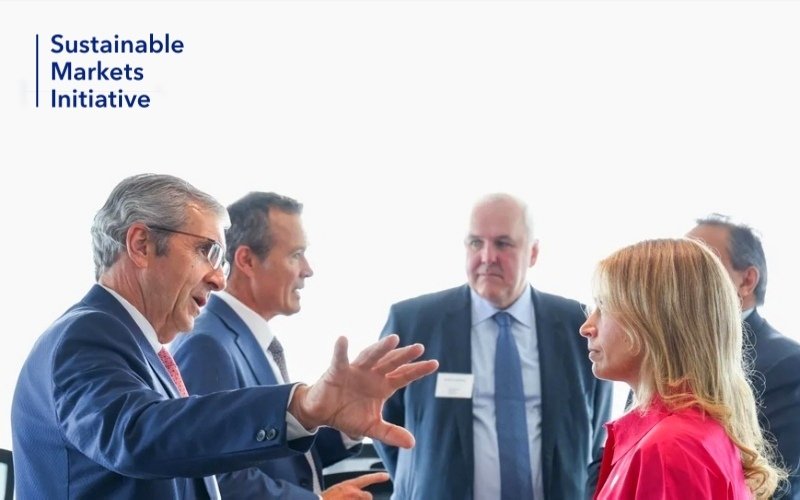
Convened at Bank of America’s New York headquarters during Climate Week 2026, the Sustainable Markets Initiative Annual Fall CEO Summit brought together global leaders to accelerate cross-sector decarbonization. Co-chaired by Brian Moynihan and Jennifer Jordan-Saifi, the summit focused on scaling sustainable AI infrastructure, mobilizing private capital for ocean economies, and aligning public-private strategies ahead of upcoming Commonwealth dialogues. Industry executives emphasized systems-level collaboration across energy, technology, and finance to drive actionable progress heading into 2027.
London, United Kingdom | September 22, 2026 – As New York Climate Week 2026 drew global focus to the intersection of policy, finance, and industrial execution, the Sustainable Markets Initiative (SMI) convened international business leaders for its Annual Fall CEO Summit. Hosted at Bank of America’s headquarters at One Bryant Park, the high-level gathering focused squarely on moving past ambition and accelerating systems-level action across energy, maritime, technology, and finance.
Co-chaired by SMI Chair Brian Moynihan and CEO Jennifer Jordan-Saifi, M.V.O., the summit served as a critical temperature check for global sustainability pathways heading into 2027, with targeted sessions addressing the AI infrastructure boom, ocean economies, carbon removal, and upcoming international Commonwealth dialogues.
Key Highlights from the Summit Floor
1. The Infrastructure Dilemma: AI, Data Centres, and Clean Power
Opening the substantive tracks, the summit tackled the rapid intersection of digital expansion and energy demand through the SMI’s Buildings and Data Centres Pathfinder.
- The Scale Challenge: With the explosion of artificial intelligence driving unprecedented demands on global power grids, leaders, including Trane Technologies Chair and CEO Dave Regnery, evaluated how critical digital infrastructure can scale sustainably without derailing net-zero goals.
- Operational Efficiency: Discussions underscored the urgency of integrating next-generation cooling, building efficiencies, and direct green power procurement directly into data centre frameworks from day one.
2. Ocean Economies and Maritime Capital: Focus on Pathfinders
For the marine and shipping sectors, the spotlight turned directly toward ocean health and the capital frameworks required to sustain blue economies.
- Oceans and Fisheries Pathfinder: Led by Rupert Howes, CEO of the Marine Stewardship Council, this session mapped out the private capital mobilization needed to protect marine ecosystems.
- Tying Ocean Health to Shipping: For maritime stakeholders, the dialogue reinforced a broader truth: the health of ocean economies is inextricably linked to the decarbonization of maritime transport, marine fuel choices, and strict biodiversity risk management across shipping corridors.
3. Geopolitical Alignment: Commonwealth Roadmaps
Adding an intergovernmental dimension to the private sector dialogue, The Honourable E.P. Chet Greene, Minister of Foreign Affairs, Trade and Barbuda Affairs of the Government of Antigua and Barbuda, briefed leaders on the upcoming November Commonwealth Heads of Government Meeting. The session stressed the critical need for public-private alignment to support climate-vulnerable coastal and island nations on the front lines of climate change.
Broadening the Horizon: Pathfinders Heading Into 2027
The summit also provided comprehensive progress updates across the SMI’s active global task forces:
- Carbon Dioxide Removal (CDR): Scaling up durable, verifiable carbon removal solutions to balance hard-to-abate sectors.
- Private Capital Mobilization: Bridging the gap between institutional capital and bankable green transition infrastructure.
- Regional Hubs: Expanding updates from the SMI’s China Council and sustainable food systems networks.
- Next-Gen Energy: Bob Mumgaard, Co-Founder and CEO of Commonwealth Fusion Systems, detailed progress across the Pathfinders, laying down strategic priorities to guide the SMI’s trajectory through 2027.
Closing Perspective: The Private Sector Mandate
Summarizing the urgency of the day’s dialogues, Jennifer Jordan-Saifi, CEO of the Sustainable Markets Initiative, emphasized that fragmented approaches will no longer suffice:
“Accelerating the sustainable transition calls for coordinated, systems-level action from business leaders across the value chain, spanning energy, technology, finance and beyond, all working together to unlock viable solutions and lasting partnerships. The private sector is primed to lead this change, and I thank every CEO who joined us this Climate Week for helping to drive it forward.”
As maritime and energy leaders look toward upcoming international summits, the mandate from New York is clear: turning transition blueprints into measurable, capitalized reality requires locking step across every tier of the global supply chain.
About Sustainable Markets Initiative (SMI)
Founded by His Majesty King Charles III (then-Prince of Wales), the Sustainable Markets Initiative (SMI) operates as the world’s premier private sector organization for the green transition, driven by its signature approach of “private sector diplomacy.” By leveraging unmatched convening power, the SMI bridges global leaders and multinational CEOs to embed sustainability at the core of global value creation and mobilize the trillions in capital required for a net-zero future.
Guided by its foundational mandates, the Terra Carta, which places Nature, People, and Planet at the heart of the economy, and the Astra Carta, which extends sustainable stewardship into space, the initiative champions systems-level change across industries and supply chains. Dubbed by its leaders as “The Growth Story of Our Time,” the SMI views bold environmental alignment not as a regulatory burden, but as the ultimate engine for enduring global economic prosperity.
Source: SMI