SEA-LNG, the global coalition dedicated to advancing the use of LNG as a marine fuel, has welcomed the International Maritime Organization (IMO)’s confirmation that the methane pathway (LNG) will play a crucial role in the shipping industry’s decarbonisation efforts. This announcement, made last Friday, marks a pivotal moment for the maritime sector as the IMO moves forward with its regulatory framework for greenhouse gas (GHG) emissions reductions.
Table of Contents
Clear Regulatory Framework for Decarbonisation
The IMO’s newly proposed regulatory framework sets the stage for a technology-neutral approach to reducing GHG emissions, ensuring that multiple fuel pathways—including LNG, methanol, and ammonia—can compete on a level playing field. SEA-LNG praised the IMO for adhering to goal-based regulations, providing a clear direction for the global shipping industry.
This framework gives ship owners the confidence to continue investing in LNG-dual fuel engine technologies, secure in the knowledge that LNG, or more specifically the methane pathway, is recognized by the IMO as a key decarbonisation solution. LNG is seen as a practical, scalable, and cost-effective alternative to traditional marine fuels, offering significant emissions reductions compared to other marine fuel options.
“We are pleased to see the IMO’s commitment to a technology-neutral, goal-based regulatory approach. This provides clarity for the shipping industry and ensures LNG’s role in reducing emissions is firmly recognized. LNG is a practical, realistic, and scalable solution that can help meet the IMO’s targets for decarbonisation.”
The Role of LNG in Sustainable Shipping
For the shipping sector, this development reinforces LNG’s importance in the decarbonisation transition. Compared to traditional fuels, LNG offers lower CO2 emissions and substantially reduces sulphur oxide (SOx), nitrogen oxide (NOx), and particulate matter (PM) emissions. As the maritime industry works to comply with increasingly stringent environmental regulations, LNG is positioned as one of the most viable alternative fuels for global shipping.
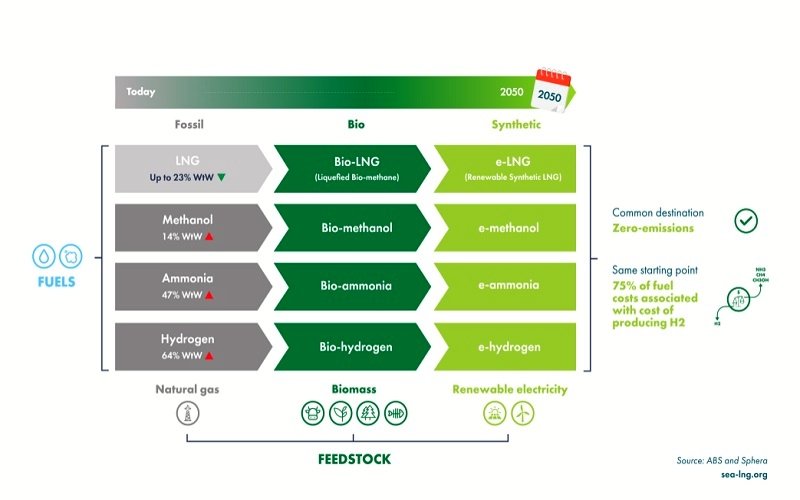
Beyond reducing emissions, the new regulatory framework is expected to further drive growth in liquefied biomethane bunkering and encourage investments in e-methane, facilitating the industry’s transition toward sustainable fuel solutions.
SEA-LNG’s Leadership in LNG Adoption
Since its founding in 2016, SEA-LNG has been at the forefront of advocating for LNG as a key enabler of sustainability in shipping. The coalition includes a diverse membership comprising shipping companies, ports, LNG suppliers, bunkering companies and infrastructure providers, all working together to highlight LNG’s benefits across the entire maritime value chain.
Through independent research on emissions, investment, and infrastructure, SEA-LNG continues to play a pivotal role in promoting LNG adoption. As the global shipping industry strives to meet emission reduction targets, SEA-LNG’s efforts ensure that LNG remains a cornerstone of the sector’s shift towards greener, lower-emission fuels.
Source: SEA-LNG