
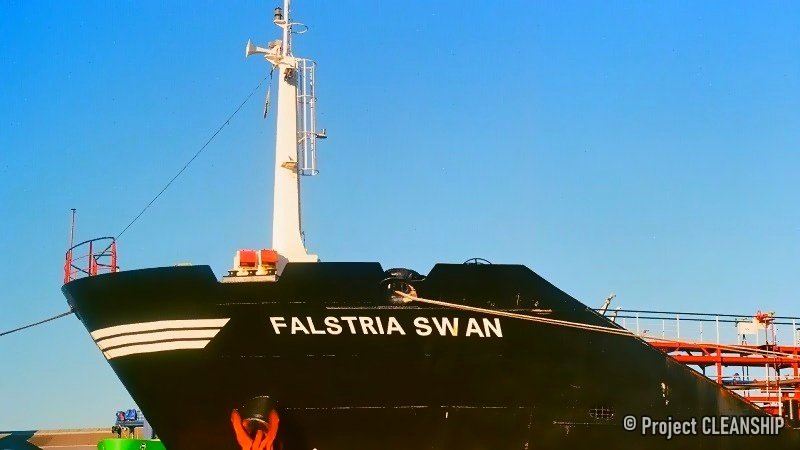
Denmark | January 15, 2026 – New research from Project CLEANSHIP demonstrates that biodiesel can drastically reduce one of the shipping industry’s most harmful emissions. Measurements onboard the Uni-Tankers A/S vessel Falstria Swan show that using B100 FAME biodiesel during normal operation can reduce Black Carbon emissions by up to 81% compared to conventional marine gas oil (MGO). The findings have been submitted to the International Maritime Organization (IMO) for consideration.
Table of Contents
Black Carbon: A Critical Climate and Health Concern
Soot particles, commonly known as Black Carbon, are a major contributor to global warming, particularly in Arctic regions where they accelerate ice melting. They also negatively affect air quality, impacting public health. The CLEANSHIP project’s real-world measurements highlight biodiesel’s potential to significantly mitigate these effects.
“We expected that biofuel would lead to cleaner combustion, but the magnitude of the reduction, especially at lower engine loads, is a very positive surprise. This demonstrates that biodiesel can reduce not only net CO₂ but also Black Carbon, which is highly significant for the shipping sector’s total climate footprint,” says Simon Martin Spangenberg Bastrupberg, consultant and measurement specialist at the Danish Technological Institute.
Advanced Measurement Technology
The emissions tests used an advanced online Black Carbon sensor from Green Instruments, developed in collaboration with the Danish Technological Institute. This technology allowed researchers to track emissions in real time under normal sailing conditions, providing highly detailed, actionable data for both operators and regulators.
“The latest real-world sailing data on biodiesel (B100) give us a clear picture of both the black carbon footprint and actual CO₂ emissions. This insight is crucial for achieving our own reduction targets while also informing data-driven recommendations for the broader shipping industry,” notes Troels Reppien, Technical Director at Uni-Tankers A/S.
Implications for the Global Shipping Industry
While biodiesel shows dramatic reductions in Black Carbon, current global biofuel production can only meet a small portion of the fleet’s total energy demand. CLEANSHIP continues to analyze data to develop practical strategies for reducing emissions across maritime operations.
The project’s white paper documenting the results has been submitted to the IMO and will be considered at the 13th session of the Sub-Committee on Pollution Prevention and Response (PPR) from 9–13 February 2026. These findings are expected to inform international efforts to limit Black Carbon emissions, particularly in sensitive Arctic environments.

About Project CLEANSHIP
Project CLEANSHIP (2024–2026) is a Danish research initiative led by the Danish Technological Institute, in collaboration with Uni-Tankers, Green Instruments, Mærsk Mc-Kinney Møller Center for Zero Carbon Shipping, Danish Maritime, and Danish Shipping. Supported by the Danish Environmental Protection Agency’s MUDP program, with a grant of DKK 18.2 million, the project focuses on testing biofuels, energy-saving technologies, and operational optimizations to reduce harmful maritime emissions.
The initiative responds to the maritime industry’s urgent need to move toward climate-neutral shipping by 2050, as shipping currently contributes 3% of global CO₂ emissions while transporting roughly 90% of the world’s goods. CLEANSHIP aims to reduce harmful emissions, including CO₂ and Black Carbon, from ships through a data-driven approach, combining biofuels, energy-saving devices, and operational optimizations.
Key demonstration areas include:
- Biofuels: Showcasing reductions in CO₂ and Black Carbon using B100 FAME and other sustainable fuels.
- Energy-saving technologies: Implementing innovations such as propeller coatings and advanced hull paints to improve efficiency.
- Operational measures: Optimizing engine load, speed management, and fuel consumption for lower emissions.
Value Creation: Operational and emissions data collected from full-scale demonstrations aboard Uni-Tankers vessels provide actionable insights and best practices for shipowners, operators, and regulators, enabling evidence-based strategies to reduce the maritime sector’s environmental footprint.
Through its collaborative approach, CLEANSHIP is helping accelerate the adoption of green solutions in shipping while creating a foundation for a sustainable and climate-friendly maritime future. the project demonstrates emission reduction potentials under realistic sailing conditions using innovative on-board solutions.
Source: Danish Technological Institute