

Naftomar Shipping & Trading expands its fleet with the delivery of the Gaz Ronin, a 93,000 CBM VLAC built by Hanwha Ocean. This next-generation LPG/Ammonia carrier features a MAN 6G60ME-C10.5-LGIP dual-fuel engine and HPSCR technology to slash carbon emissions. The vessel marks a $500M milestone in Naftomar’s strategy to lead the global zero-carbon ammonia and energy transition market.
Greece | February 27, 2026 – Greek LPG trading and shipping powerhouse Naftomar Shipping & Trading Co. Ltd. has officially announced the delivery of its newest vessel, the Gaz Ronin. The 93,000 CBM Very Large Ammonia Carrier (VLAC) was delivered by the South Korean shipyard Hanwha Ocean, marking a significant milestone in the company’s ambitious fleet renewal strategy.
The Gaz Ronin is the first of a series of four sister vessels ordered by Naftomar in late 2023, a deal valued at approximately $500 million. These vessels are among the largest ammonia carriers ever built, specifically designed to address the surging global demand for zero-carbon energy transportation.
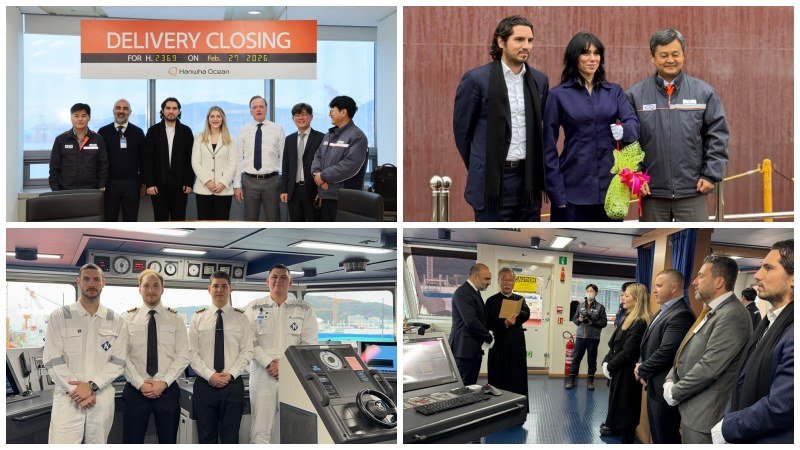
Technical Specifications & Propulsion
The vessel’s design focuses on “fuel flexibility,” a critical factor for modern bunkering and operational efficiency.
- Main Engine: Equipped with a MAN 6G60ME-C10.5-LGIP dual-fuel engine.
- Fuel Capability: The engine is designed to run on LPG (Liquid Petroleum Gas) as its primary fuel source, significantly reducing CO2 and sulfur emissions compared to conventional fuel oils.
- Ammonia-Ready: Crucially, the vessel is “Ammonia-Ready.” While currently optimized for LPG, the systems are designed to be converted to ammonia propulsion once the relevant engine technology and regulatory frameworks are fully matured.
- Emission Control: To meet IMO Tier III requirements, the engine is paired with High-Pressure Selective Catalytic Reduction (HPSCR) technology to minimize nitrogen oxide (NOx) emissions.
Energy Efficiency Features
Beyond its dual-fuel capabilities, the Gaz Ronin integrates several “Smart Ship” technologies to optimize performance:
- Shaft Generator Motor (SGM): Allows the vessel to generate electricity from the main engine’s rotation, reducing the need for auxiliary generators during transit.
- HS4 Platform: Utilizes Hanwha Ocean’s proprietary SmartShip Solution & Service (HS4) for real-time data monitoring and route optimization.
Strategic Context
The addition of the Gaz Ronin reinforces Naftomar’s shift toward the “Green Ammonia” value chain. As ammonia gains traction as both a carbon-free fuel and a hydrogen carrier, having high-capacity, energy-efficient tonnage allows Naftomar to secure a leading position in the evolving energy transition market.
The vessel is classed by Bureau Veritas (BV), which provided technical oversight to ensure the safe carriage of both LPG and anhydrous ammonia.
“This addition reinforces our commitment to investing in modern, energy-efficient tonnage capable of supporting the evolving gas and ammonia transportation landscape,” the company stated.
Next Steps for Naftomar: The remaining three sister vessels, including the Gaz Gotham, Gaz Pegasus, and Gaz Rose, are scheduled for delivery through 2026 and 2027.
About Naftomar Shipping and Trading Co. Ltd.
Established in 1972, Naftomar Shipping and Trading Co. Ltd. is a prominent Greek-based maritime company specializing in the logistics, trading, and transportation of Liquefied Petroleum Gas (LPG) and petrochemical gases. While originally founded in Beirut, the company relocated its headquarters to Voula, Athens, in 1991.
Core Operations & Expertise
Naftomar is unique because it integrates both trading and ship management, allowing it to control the entire supply chain from purchase to final delivery.
- LPG & Petrochemical Trading: They are major players in the Mediterranean and Far East markets, trading LPG, ethylene, propylene, and crude C4.
- Floating Storage & STS: The company was a pioneer in using floating storage to meet import demands (notably in China during the 1990s) and has conducted over 4,000 Ship-to-Ship (STS) operations.
- Fleet Profile: As of early 2026, Naftomar manages a diverse fleet of roughly 20-25 gas carriers, ranging from small pressurized vessels to Very Large Gas Carriers (VLGCs).
Source: Naftomar Shipping & Trading Co.