
Yanmar Power Solutions has secured prestigious DNV Type Approval for its GH-FC Series maritime hydrogen fuel cell system, clearing a vital regulatory pathway for its international commercial deployment. Operating on a modular design with outputs ranging from 80 kW to 320 kW, the zero-emission system has already established a robust operational track record across diverse Japanese vessels, including passenger ships, municipal workboats, and aquaculture vessels. This global certification enables shipowners and system integrators worldwide to adopt Yanmar’s proven hydrogen technology with significantly reduced regulatory barriers as the maritime industry accelerates its decarbonization transition.
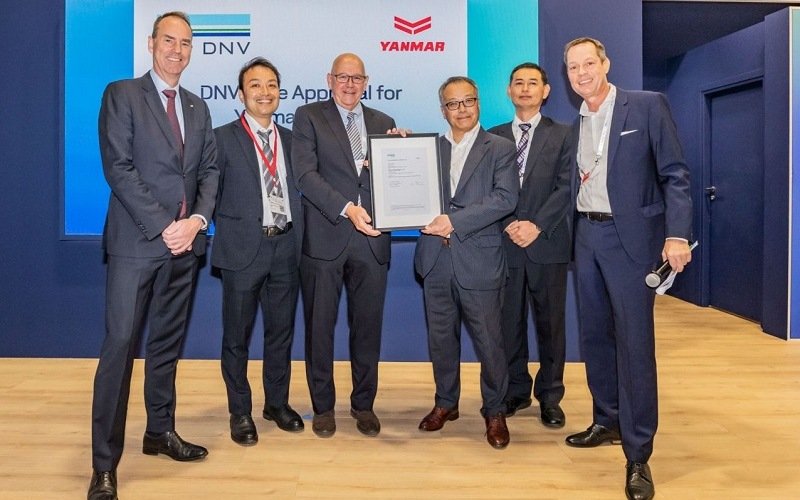
Osaka, Japan | September 4, 2026 – Yanmar Power Solutions Co., Ltd., a subsidiary of Yanmar Holdings Co., Ltd., has officially secured Type Approval from leading classification society DNV for its GH-FC Series maritime hydrogen fuel cell system. The milestone, commemorated at an official award ceremony in Osaka, marks a critical shift for the technology as it transitions from proven domestic deployments in Japan toward global commercial adoption.
By granting Type Approval, DNV confirms that the GH-FC Series complies with its stringent maritime rules and guidelines. The certification significantly lowers the regulatory burden for naval architects, system integrators, and shipowners, removing project-by-project approval hurdles and accelerating hydrogen integration across international fleets.
Yanmar GH-FC Series at a Glance
- System Architecture: Modular Maritime Hydrogen Fuel Cell System
- Power Output Options: 80 kW, 160 kW, 240 kW, and 320 kW
- Operating Principle: Electrochemical reaction (Hydrogen + Oxygen)
- Emissions Profile: Zero operational CO2, NOx, SOx, and Particulate Matter
- Development Timeline: R&D since 2015 | Commercialized 2023 | DNV Approval 2026
Strategic Industry Impact & Leadership Perspectives
Yanmar’s marine fuel cell journey began in 2015, culminating in commercialization in 2023. The DNV approval provides the structural framework needed to expand into key foreign decarbonization markets, particularly Europe.
“Achieving DNV Type Approval represents a major milestone in our journey to bring hydrogen-powered solutions to the marine market,” said Masaru Hirose, President and Representative Director of Yanmar Power Solutions. “Building on our operational experience in Japan, we aim to support customers around the world in their transition to zero-emission operations and realize sustainable maritime transportation.”
Eric Tigelaar, Department Manager of the Commercial Marine Department at Yanmar Europe, highlighted the regional momentum: “This certification strengthens our ability to support customers throughout Europe and beyond who are seeking practical pathways toward decarbonization. The GH-FC series combines easy installation, operational flexibility, modularity and environmental performance, making it an attractive solution for a wide range of vessel applications.”
Olaf Drews, Head of Engines & Pressurized Equipment at DNV Maritime, emphasized market readiness: “Every step demonstrates the growing maturity of hydrogen fuel cell technology and continues to build confidence in the market and showcase its readiness for broader commercial applications. DNV is pleased to continue supporting innovative solutions that can help accelerate the transition toward zero-emission shipping.”
Proven Track Record: Japanese Deployments
Before seeking international certification, Yanmar built an operational baseline within Japan’s maritime ecosystem. The GH-FC platform has demonstrated multi-vessel versatility across diverse operating profiles:
- Passenger Vessels: Selected for MOL Techno-Trade’s zero-emission passenger ship, HANARIA.
- Municipal Workboats: Installed on Tokyo Metropolitan Government workboats Tokyo Mirai Maru and Tsukiji ZERO.
- Ocean Cruise Ships: Integrated into NYK Line’s new cruise ship project, Amane.
- Aquaculture Operations: Deployed on Kurose Suisan’s dedicated aquaculture feeding workboat.
Key System Specifications
The GH-FC Series delivers zero-emission auxiliary or propulsion power by combining pure hydrogen with atmospheric oxygen. Its modular layout allows multiple units to be linked in parallel, providing flexible scalability to meet specific onboard load profiles without requiring custom structural re-engineering.
About Yanmar
With beginnings in Osaka, Japan, in 1912, Yanmar was the first ever to succeed in making a compact diesel engine of a practical size in 1933. A pioneer in diesel engine technology, Yanmar is a global innovator in a wide range of industrial equipment, from small and large engines, agricultural machinery and facilities, construction equipment, energy systems, marine, to machine tools and components, Yanmar’s global business operations span seven domains. Guided by its Brand Statement, “A Sustainable Future, New Value Through Technology,” Yanmar provides advanced solutions to the challenges customers face on land, at sea, and in the city, working towards realizing a sustainable future.
Source: Yanmar