
Barcelona | February 4, 2026 – The Catalonia Institute for Energy Research (IREC) has successfully spearheaded the SUPORT consortium, validating a pioneering circular economy process that transforms wastewater and captured CO₂ into high-grade sustainable maritime fuel (SMF).
The milestone, announced this week, marks a significant leap for the Port of Barcelona’s Energy Transition Plan, proving that technically viable alternatives exist for hard-to-abate sectors where direct electrification remains a challenge.
The Innovation: From Sludge to Synthesis Gas
The SUPORT project centers on a sophisticated integration of two proprietary IREC technologies: co-electrolysis and the Fischer–Tropsch (FT) catalytic reaction.
Unlike traditional methods that require separate stages for hydrogen and carbon processing, this system optimizes efficiency by combining them into a single, high-performance stream:
- Feedstock Sourcing: Partners Aigües de Barcelona and Cetaqua refined processes to extract biological hydrogen from organic matter and sludge generated at municipal wastewater treatment plants.
- Co-Electrolysis: The IREC-developed co-electrolyser converts the recovered wastewater and CO₂ into syngas (a mixture of hydrogen and carbon monoxide).
- Fischer–Tropsch Synthesis: This syngas is then fed into a catalytic reactor, where it is transformed into a synthetic hydrocarbon.
The resulting fuel is chemically equivalent to marine diesel. Crucially, it is a “drop-in” solution, meaning it can be blended with or completely replace conventional fuels without requiring modifications to existing ship engines.
Technical Milestones and Performance
Researchers have validated the process at a pilot scale, achieving impressive technical benchmarks:
- Capacity: The pilot reactor successfully produced 5 Nm³/day of syngas.
- Efficiency: The cobalt- and cerium oxide-based catalyst achieved CO conversion rates above 70%.
- Selectivity: The system showed over 80% selectivity for C5+ hydrocarbons, the specific chain lengths required for liquid fuels.
Collaborative Leadership and Vision
The project brought together a diverse range of expertise across the logistics and energy value chain:
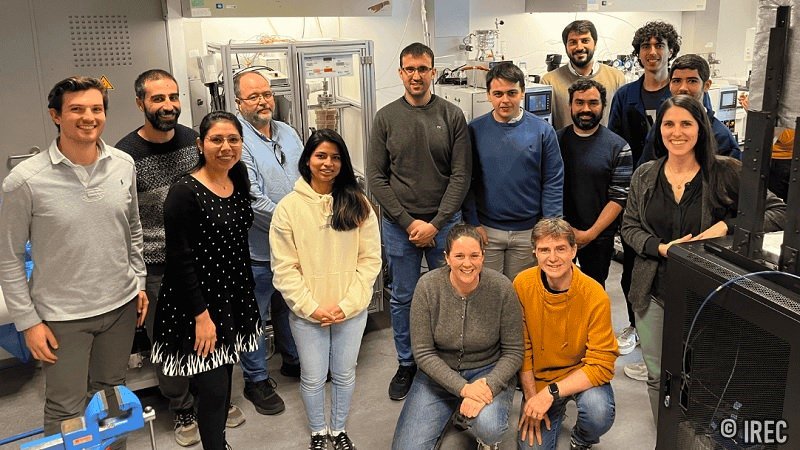
- IREC: Led the technical coordination via Lucile Bernadet and Marc Torrell (Nanoionics and Fuel Cells) and Jordi Guilera (Sustainable Fuels).
- Port of Barcelona: Conducted demand studies and aligned the project with its roadmap to become a net-zero port by 2050.
- CIMNE-CENIT: Provided economic and environmental impact analyses, confirming the technology’s scalability.
“SUPORT demonstrates that it is possible to provide real solutions for the decarbonization of sectors where direct electrification is not feasible,” stated Lucile Bernadet, Project Coordinator at IREC. “These fuels can also be used in other heavy-duty engines, such as trucks, making this a key step toward accelerating the energy transition.”
The Road Ahead: Industrial Scaling
While the laboratory and pilot phases have proven successful, the consortium is now looking toward the horizon. Daniel Ruiz, Head of Sustainable Fuels at the Port of Barcelona, emphasized that the next priority is moving beyond the lab.
“The next challenge is to scale this technology to an industrial level,” Ruiz noted. “This will expand the supply of zero-emission fuels to help decarbonize the entire logistics chain, both maritime and land-based.”
This initiative aligns with European Union objectives for climate neutrality by 2050 and is funded under the NextGenerationEU Recovery, Transformation, and Resilience Plan.
About IREC: The Catalonia Institute for Energy Research
The Catalonia Institute for Energy Research (IREC) is a premier public research center dedicated to the energy sector’s value chain. Established in 2008, IREC’s mission is to drive the sustainable development of society and bolster industrial competitiveness through medium- and long-term research of excellence.
Ascribed to the Department of Climate Action, Food and Rural Agenda of the Generalitat de Catalunya, IREC operates under a public-private Board of Trustees that includes the Spanish Government, leading universities, and major energy industry players such as Endesa, Naturgy, and Enagás.
As a CERCA center (Research Centers of Catalonia) and an accredited TECNIO center, IREC is recognized for its dual focus on high-level scientific discovery and the direct transfer of technology to the marketplace.
Core Research Units
IREC’s scientific activity is structured into two primary thematic units, housing specialized groups that lead international projects in hydrogen, renewables, and smart grids:
1. Advanced Materials for Energy Unit
- Solar Energy Materials and Systems: Developing next-generation, sustainable photovoltaic technologies.
- Nanoionics and Fuel Cells: Researching solid-state energy conversion (SOEC/SOFC) and advanced manufacturing like 3D printing of ceramics.
- Functional Nanomaterials: Engineering materials at the nanoscale to improve energy efficiency and storage.
- Energy Storage, Harvesting and Catalysis: Focusing on synthetic fuels (e.g., the SUPORT project), batteries, and CO₂ valorization.
2. Energy Efficiency: Systems, Buildings and Communities Unit
- Thermal Energy & Buildings Performance: Optimizing heating and cooling systems to achieve net-zero energy buildings.
- Energy System Analytics: Utilizing data science to improve energy management and distribution.
- Power Systems: Designing the “Smart Grids” of the future, integrating electric vehicles and renewable energy into the power network.
Source: IREC – The Catalonia Institute for Energy Research