
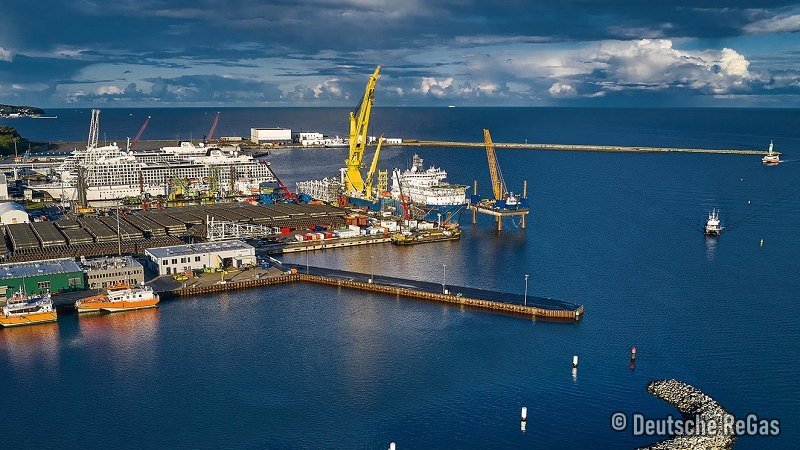
Mukran, Germany | January 05, 2025 – The Energie-Terminal “Deutsche Ostsee” operated by Deutsche ReGas, has solidified its position as the critical linchpin of Germany’s energy infrastructure. New data confirms that the facility recorded the highest feed-in volumes in the country during the fourth quarter of 2025, significantly outperforming state-backed competitors and signaling a robust supply outlook for the Baltic LNG market.
The Numbers: Dominating the Feed-In Landscape
Throughout the final three months of 2025, the Mukran facility acted as the primary gateway for liquefied natural gas (LNG) into the German grid.
- Quarterly Throughput: The terminal sent out a total of 12.53 TWh of gas.
- December Surge: Of that total, 4.24 TWh was processed in December alone, amid peak winter demand.
- Market Share: Deutsche ReGas accounted for approximately two-thirds of the total feed-in capacity when compared to the four other floating LNG terminals (FSRUs) currently operating in Germany.
This performance represents roughly 15% of the average quarterly consumption for all German households and commercial customers, proving that the privately financed terminal has become more than just a supplementary site, it is now a central pillar of the nation’s energy security.
Strategic Impact on the Bunkering Sector
For the marine fuel industry, the high utilization rates at Mukran are a signal of liquidity and infrastructure maturity.
- Supply Reliability: High feed-in volumes suggest a consistent schedule of LNG carrier arrivals. For bunker barge operators and LNG-fueled vessel owners, this consistency reduces the risk of supply bottlenecks in the Baltic Sea.
- Infrastructure as a “Green Hub”: Deutsche ReGas has confirmed plans to expand the Mukran site into a “hydrogen-ready” terminal. This includes the planned construction of hydrogen electrolyzers, positioning the site to eventually provide ammonia and other hydrogen derivatives for the next generation of dual-fuel vessels.
- Privately Financed Agility: Unlike the state-mandated terminals at Wilhelmshaven or Brunsbüttel, the Mukran and Lubmin sites are the only privately financed FSRU projects in Germany. Their record-breaking Q4 performance validates a market-driven model for energy imports.
“By achieving the highest send-out performance among German LNG terminals… we are fulfilling our responsibility for security of supply,” said Ingo Wagner, CEO of Deutsche ReGas. “I would like to thank our customers, who began weekly ship calls even before the start of the heating season, ensuring high utilization.“
Outlook for 2026: Expansion and New Tenders
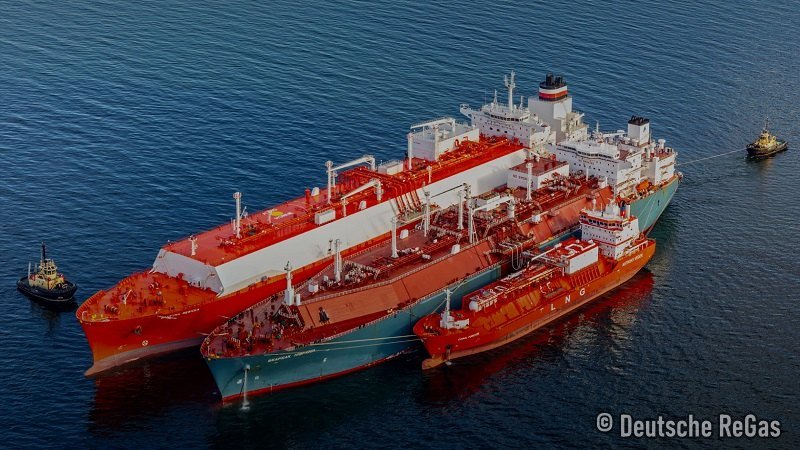
The momentum at Mukran is expected to carry into the new year. Deutsche ReGas has already reported that 80% of the terminal’s capacity for 2026 is already booked. Furthermore, the company is reportedly running a tender process to bring a second FSRU back to the facility to further bolster regasification capacity, after a previous unit was relocated earlier in 2025.
For shipowners navigating the SECA (Sulphur Emission Control Area) zones of the Baltic, the stability of the Mukran hub ensures that LNG remains a viable, cost-competitive transition fuel as the industry moves toward the 2030 FuelEU Maritime targets.
Key Terminal Facts: Deutsche Ostsee (Mukran)
| Metric | Detail |
| Operator | Deutsche ReGas (Private) |
| Location | Port of Mukran, Island of Rügen |
| Q4 2025 Feed-in | 12.53 TWh |
| Core Asset | FSRU Neptune (Sub-chartered from TotalEnergies) |
| Future Plans | Hydrogen Electrolyzers & Carbon-Neutral Derivatives |
About Deutsche ReGas
Deutsche ReGas is a leading provider of European energy infrastructure, specializing in the rapid deployment of critical gas import solutions. In the industrial port of Mukran, the company operates the Energie-Terminal “Deutsche Ostsee.” This facility, alongside the previously completed LNG terminal in Lubmin, represents a significant milestone in German energy history: they are the first and only privately financed floating liquefied natural gas terminals in the country.
Beyond its current LNG operations, Deutsche ReGas is aggressively pivoting toward the future of the maritime and industrial energy transition. The company’s long-term roadmap includes:
- Hydrogen Hub Lubmin: The construction of 200 MW hydrogen electrolyzers (scaling to 500 MW by 2028).
- Green Ammonia Cracking: Plans for the world’s first floating green ammonia cracker to provide carbon-neutral energy derivatives.
- Infrastructure Synergy: Direct connection to the German hydrogen core network to supply industrial and marine customers across Europe.
Source: Deutsche ReGas