
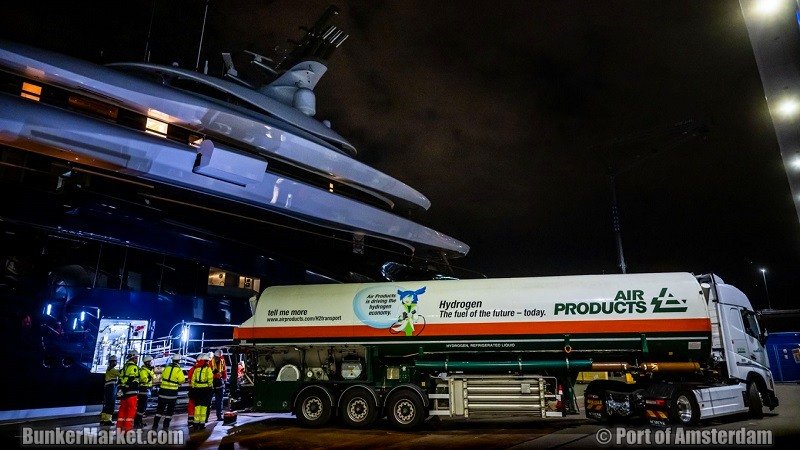
In a landmark moment for sustainable shipping, the Port of Amsterdam has completed the Netherlands’ first-ever liquid hydrogen bunkering operation. The 118.8-meter superyacht Breakthrough was successfully fueled using cutting-edge hydrogen technology, marking a new era in zero-emission maritime innovation.
Port of Amsterdam, 28 May 2025 — A major milestone in sustainable maritime fuel innovation was achieved this month as the first-ever liquid hydrogen bunkering operation in the Netherlands took place at the Port of Amsterdam. The operation marked a historic turning point for the Dutch maritime sector and the broader transition to zero-emission shipping.
The operation involved the 118.8-meter superyacht Breakthrough, currently docked at Feadship, a renowned Dutch superyacht builder. As the first vessel in the country to be fueled with liquid hydrogen, Breakthrough now leads the way in alternative marine propulsion.
Table of Contents
Truck-to-Ship Bunkering with Liquid Hydrogen
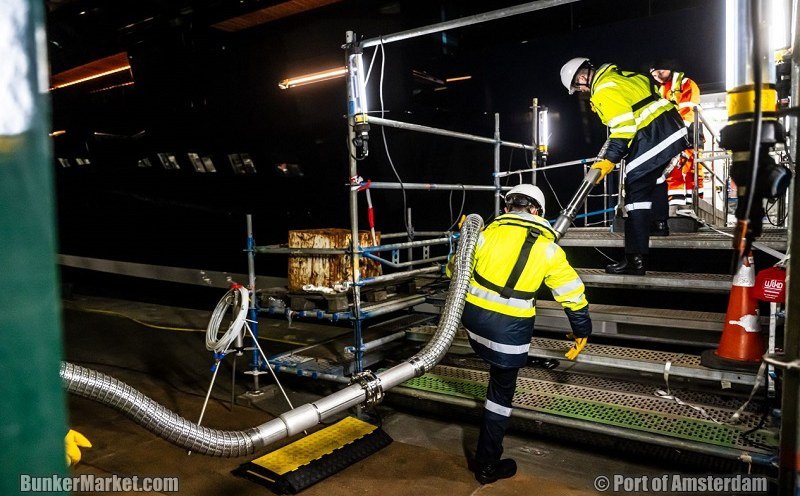
The groundbreaking bunkering process commenced with an initial delivery of liquid hydrogen, followed by a series of subsequent fueling operations in the weeks that followed. The supply was facilitated through a truck-to-ship bunkering method using specialized tankers operated by Air Products, a global leader in hydrogen logistics and technologies.
The superyacht Breakthrough is the first of its kind to incorporate a 3.2 MW hydrogen fuel cell system—a cutting-edge technology that generates electrical power through an electrochemical reaction instead of combustion. The only by-product: pure water. This innovative propulsion method represents a leap forward for the maritime industry’s ambitions toward emission-free navigation.
Vision for a Multi-Fuel Future
Milembe Mateyo, Director of Central Nautical Management (CNB) and State Harbour Master of the North Sea Canal, emphasized the strategic significance of this development:
“We expect that several alternative marine fuels will coexist in the future. This requires flexibility and foresight from both us and the companies in the port area. We are proud that the first bunkering with liquid hydrogen has now taken place in our port. It demonstrates that hydrogen is a viable solution for zero-emission sailing. This is an important step toward more sustainable shipping and our goal to facilitate the use of sustainable fuels as a Multi Fuel Port.”
This aligns with the Port of Amsterdam’s vision to function as a Multi Fuel Port, offering support and infrastructure for a range of future fuels—including biofuels, methanol, liquefied methane, and now, liquid hydrogen.
Safety, Sustainability, and Support
The Port of Amsterdam played an essential role in enabling the success of this operation. Drawing on its past experience with other alternative fuel bunkering—including liquefied methane and compressed hydrogen—the port provided critical technical guidance and safety expertise to the North Sea Canal Area Environmental Agency (Omgevingsdienst OD).
This collaboration ensured the hydrogen bunkering process met rigorous safety standards and set a framework for future bunkering operations involving high-energy, zero-emission fuels.
Towards Clean Shipping
The success of this project reinforces Amsterdam’s commitment to supporting and accelerating the transition to clean shipping. By actively facilitating and regulating innovations in fuel technology, the Port aims to position itself as a leader in sustainable maritime logistics.
“We aim to take the lead in driving and accelerating the sustainability of shipping,” the Port said in its official statement. “We do this by facilitating, encouraging, and regulating — for example, by developing infrastructure and creating the necessary conditions for the transition to fully sustainable shipping.”
With this inaugural liquid hydrogen bunkering now complete, the Port of Amsterdam continues to cement its reputation as a pioneer in green shipping, making a definitive stride toward a zero-emissions maritime industry.
About Feadship
Feadship is a renowned Dutch shipyard specializing in the design and construction of custom superyachts. The company is at the forefront of integrating sustainable technologies into luxury vessels. The 118.8-meter superyacht Breakthrough, built by Feadship, is the first vessel in the Netherlands to be equipped with a 3.2 MW hydrogen fuel cell system, marking a significant advancement in emission-free maritime propulsion.
About Air Products
Air Products is a global leader in industrial gases and hydrogen solutions. With over 80 years of experience, the company provides clean energy solutions that are essential for the decarbonization of industries. In the Port of Amsterdam, Air Products facilitated the first liquid hydrogen bunkering operation by supplying the fuel via a truck-to-ship method, showcasing its expertise in hydrogen logistics and infrastructure.
About the Port of Amsterdam
The Port of Amsterdam is the fourth-largest seaport in Europe and plays a vital role in international trade and logistics. Strategically located in the North Sea Canal area, the port is a gateway for goods entering and leaving Europe and is home to more than 2,000 companies. With a strong commitment to sustainability and innovation, the port aims to be one of the cleanest and most efficient in the world.
Port of Amsterdam committed to facilitating the transition to sustainable shipping. Its Clean Shipping Vision is central to this goal, promoting the adoption of alternative fuels and zero-emission solutions throughout the maritime sector. As a Multi Fuel Port, it offers infrastructure and support for various alternative fuels, including LNG, methanol, biofuels, and hydrogen. The Port plays a pivotal role in enabling innovative fuel solutions, ensuring safety, and collaborating with stakeholders to promote zero-emission maritime operations.
Source Port of Amsterdam