
This Dutch-German partnership bridges the Leiden-based 123Carbon insetting registry with Berlin’s ZERO44 regulatory platform to streamline global maritime emissions compliance. By linking the North Sea bunkering hubs with Mediterranean shipping corridors, the alliance provides a unified digital infrastructure for FuelEU Maritime and EU ETS mandates. This integration ensures that shipowners worldwide can now seamlessly manage carbon credits and compliance costs across both mandatory and voluntary markets.
Leiden and Berlin | October 2, 2025 – In a move that signals a major maturation of the maritime carbon accounting landscape, 123Carbon and ZERO44 have officially entered into a strategic partnership. The collaboration aims to bridge the gap between mandatory regulatory requirements and voluntary carbon insetting, providing shipowners and charterers with a “single pane of glass” for emissions management.
As the industry grapples with the escalating costs of the EU Emissions Trading System (EU ETS) and the impending complexities of FuelEU Maritime, the ability to strategically allocate the “green value” of low-carbon fuels has become a commercial necessity rather than a sustainability luxury.
Bridging the Regulatory-Voluntary Divide
The core value proposition of this partnership lies in the dual-utility of low-carbon fuels. Currently, a vessel bunkering biofuel or green methanol faces a strategic crossroads:
- Mandatory Market: Use the emissions savings to meet FuelEU Maritime targets, bank them for future years, or pool them with underperforming vessels to avoid heavy penalties.
- Voluntary Market (Insetting): Allocate those same savings to cargo owners (Scope 3) who are willing to pay a premium to decarbonize their specific supply chains.
The integration of 123Carbon’s independent insetting platform with ZERO44’s suite of CO2 management tools ensures that these two paths are no longer siloed. By synchronizing data, the partnership eliminates the risk of double-counting, a critical concern for auditors and ESG stakeholders, ensuring that a single ton of CO2 reduction isn’t claimed by both a regulatory body and a private customer.
A Unified Digital Ecosystem
The partnership creates a streamlined workflow for maritime stakeholders who are often overwhelmed by fragmented data:
- Real-Time Compliance Monitoring: ZERO44’s software allows operators to forecast their regulatory exposure under CII, EU ETS, and FuelEU Maritime, turning raw fuel data into actionable financial insights.
- Book and Claim Issuance: Once the low-carbon fuel is consumed, 123Carbon’s registry facilitates the issuance of Environmental Attribute Certificates (EACs). These certificates follow globally accepted “Book and Claim” methodologies, allowing the environmental benefit to be decoupled from the physical fuel and sold to freight forwarders or shippers.
- Commercial Optimization: For the first time, finance and chartering departments can decide in real-time whether a specific bunkering operation is more valuable as a compliance offset or as a marketable “green” service for their clients.
“For the first time, voluntary carbon trading opportunities are seamlessly combined with regulatory obligations… within a single platform,” noted Frederike Hesse, Managing Director at ZERO44. “This integration provides our customers with full transparency, empowering them to make optimal decisions and secure a clear competitive advantage.”
A “Hard-to-Abate” Industry Under Pressure
The timing of this announcement is no coincidence. The maritime sector is currently navigating a “perfect storm” of regulation. With the International Maritime Organization (IMO) targeting net-zero by or around 2050, and the European Union leading the charge with regional penalties, the cost of carbon is now a permanent line item on the balance sheet.
Jeroen Van Heiningen, Founder of 123Carbon, emphasized the shift in market dynamics: “Shipowners and charterers are under pressure not only to comply with evolving regulations but also to offer low-carbon services to their customers seeking to lower emissions related to sea freight. We are ensuring that our customers can take a holistic approach to carbon management.”
Who This Affects
The rollout of this integrated solution targets four key pillars of the shipping organization:
- ESG Managers: Providing verified data for sustainability reporting.
- Chartering Teams: Allowing them to offer “carbon-neutral” freight options to premium clients.
- Fuel Procurement: Informing the ROI on more expensive alternative fuels.
- Finance Departments: Managing the financial liability of EU ETS allowances and FuelEU penalties.
As the maritime industry shifts from “intent” to “execution” regarding decarbonization, digital infrastructure like that provided by 123Carbon and ZERO44 will likely become the standard operating environment for any fleet serious about navigating the energy transition profitably.
123Carbon: The Independent Standard for Insetting
Headquartered in Leiden, The Netherlands, 123Carbon has positioned itself as the industry’s “neutral arbiter.” Founded in 2021 by Jeroen van Heiningen, a sustainability veteran with deep roots at Accenture and GoodFuels, the company tackles the most significant hurdle in maritime decarbonization: The Green Premium.
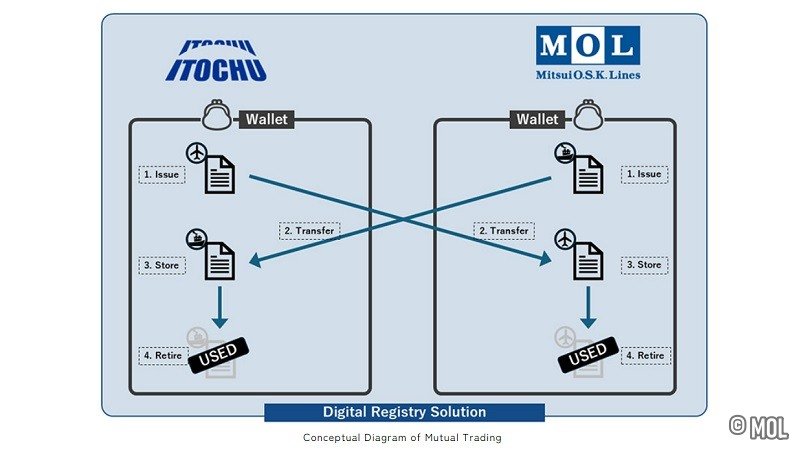
- The Mission: To enable “Book and Claim” for the transport sector. This allows the environmental benefits of a low-carbon fuel (like Bio-LNG or Green Methanol) to be decoupled from the physical molecules and sold as certificates to those who need them most.
- The “123” Philosophy: The name reflects their core capability, transferring Scope 1 reductions (from the shipowner) into Scope 3 credits for the cargo owner or freight forwarder.
- Key Innovation: Their platform is built on a private, blockchain-backed registry. This ensures that every Environmental Attribute Certificate (EAC) is unique, immutable, and follows a strict chain of custody.
ZERO44: The Digital Navigator of EU Regulation
Based in the tech hub of Berlin, ZERO44 is a SaaS pioneer founded in 2022 by Nils Obermann and Friederike Hesse. While 123Carbon manages the value of the carbon, ZERO44 manages the obligation of the carbon.
- The Problem Solver: With the maritime industry entering a “regulatory hurricane” (CII, EU ETS, and now FuelEU Maritime), shipping companies were drowning in spreadsheets. ZERO44 built a “Carbon Ledger” to centralize this data.
- The “FuelEU Calculator”: In late 2024, ZERO44 became a household name in bunkering circles by releasing a free, high-fidelity calculator that allowed operators to forecast their massive non-compliance penalties before they happened.
Source: ZERO44