
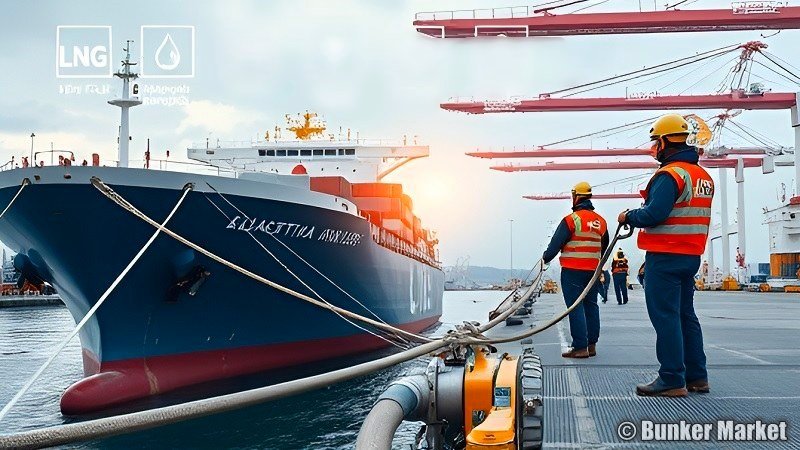
The U.S. Coast Guard (USCG) has issued Policy Letter CG-OES No. 01-25, establishing comprehensive new guidelines for the bunkering of vessels using Liquefied Natural Gas (LNG) and other alternative marine fuels, such as methanol, ammonia, hydrogen and LPG. This pivotal update reflects the Coast Guard’s evolving approach to supporting decarbonization in maritime shipping while ensuring continued safety and security across U.S. ports and waterways.
The new policy, released by the Office of Operating and Environmental Standards (CG-OES), officially cancels and replaces previous bunkering guidance outlined in Policy Letters CG-OES 01-15 and 02-15, both dated February 19, 2015.
Table of Contents
Why This Policy Matters: A Regulatory Pivot in Maritime Fueling
Maritime decarbonization is no longer a distant ambition — it is a rapidly unfolding reality. As the global shipping industry embraces LNG, methanol, ammonia, hydrogen, and other emerging marine fuels to comply with IMO 2030/2050 emissions targets and various national regulations, the U.S. maritime regulatory framework must keep pace.
Historically, U.S. bunkering regulations — primarily under 33 CFR Parts 127, 154, and 156, and 46 CFR Subchapters D and O — have been built around petroleum-based fuels. While applicable in part, they fall short in addressing the unique hazards and operational nuances of cryogenic, low-flashpoint, and high-reactivity fuels entering the marine fuel supply chain.
Policy Letter 01-25 addresses this urgent need by shifting from prescriptive rulemaking to a risk-based, performance-oriented framework, empowering Captains of the Port (COTPs) to assess, approve, and monitor bunkering operations through structured but flexible guidance.
Scope of Policy Letter CG-OES 01-25
The core aim of the policy is to:
- Provide Captains of the Port (COTPs) with flexible, risk-based guidance to assess LNG and alternative fuel bunkering operations.
- Establish a structured yet adaptable risk assessment model, grounded in current international and industry standards (such as ISO/IEC 31010).
- Enable safe and efficient fueling operations that do not disrupt maritime commerce or compromise environmental and infrastructure safety.
New Risk Assessment-Based Policy Structure; Core Elements and Operational Mandates
1. Definition of Bunkering and Applicability
Policy Letter 01-25 defines “bunkering” as the transfer of liquid or gaseous fuel in bulk into a vessel’s permanent fuel tanks for propulsion or operations. The guidance explicitly applies to waters under U.S. jurisdiction and fills regulatory gaps where current statutes lack specificity for alternative fuel types.
2. COTP Authority Expanded with Modernized Oversight Tools
Under the Ports and Waterways Safety Act (46 U.S.C. Chapter 700) and 33 CFR Part 160, COTPs hold statutory authority to control hazardous cargo operations, including alternative fuel transfers, especially when these pose potential risks to:
- Navigable waters and critical infrastructure
- Shoreline facilities and port communities
- The integrity of the Marine Transportation System (MTS)
COTPs may:
- Assess operational safety of bunkering activities
- Direct or halt operations if hazards to infrastructure, the environment, or the MTS are identified
- Require advance notice, full bunkering proposals, and detailed risk assessment plans from operators or fuel suppliers
This policy letter reaffirms and expands COTP discretion to evaluate operational proposals, impose conditions, or issue cease operations orders — ensuring that fuel innovation does not compromise maritime safety.
Step-by-Step Bunkering Risk Assessment Model
Central to the new policy is a robust, multi-layered risk assessment bunkering model designed to:
- Accommodate diverse fuel chemistries and handling techniques
- Account for site-specific hazards
- Promote consistency across U.S. port regions while enabling COTP flexibility
A. Bunkering Proposal Requirements
All proposed bunkering operations involving alternative fuels must begin with a detailed proposal initiated by the fuel supplier. It should include:
- Type of fuel to be transferred (e.g., LNG, ammonia, methanol)
- Date range, location, vessel, and facility details
- Stakeholders involved in the operation
B. Mandatory Risk Assessment Plan
The risk assessment plan must be submitted prior to operations and should outline:
- List of participants and their technical qualifications
- Assessment methodologies (e.g., HAZID, HAZOP, Bowtie, FMEA)
- Assumptions and scenarios considered
- Pre-identified hazards and mitigations
Key hazard categories to be addressed include:
- Mooring, docking, and anchoring safety
- Compatibility and connection integrity
- Pressure/vapor control during transfer
- Emergency shutdown and disconnection procedures
- Environmental sensitivity and proximity to critical infrastructure
- Simultaneous Operations (SIMOPs)
- Port/municipal emergency response readiness
COTPs retain the authority to reduce or expand the scope of the assessment based on the novelty, location, or frequency of the operation.
C. Issuance of ‘No Objection’ Statement
Following COTP review and satisfaction with the final risk assessment report, the COTP may issue a Statement of No Objection, which is a prerequisite for commencing bunkering operations.
⚠️ Note: This statement is not a blanket approval — it may include conditions, limitations, and monitoring requirements, reflecting the dynamic nature of marine risk management.
Oversight Mechanisms and Compliance Tools
The policy integrates existing USCG operational controls with enhanced tools to monitor and enforce safe practices:
Advance Notice of Transfer
Per 33 CFR § 156.118, COTPs may require a minimum Four-hour notice before bunkering operations begin.
Transfer Monitoring
In line with COMDTINST M16455.11, COTPs may conduct onsite transfer monitors, using the risk assessment report as the basis for real-time compliance verification.
Harbor Safety Committee (HSC) Engagement
Harbor Safety Committees are highlighted as strategic forums to:
- Localize national policy
- Refine port-specific guidelines
- Elevate stakeholder collaboration
- Support normalization of alternative fuel bunkering practices in each port zone
Facility Oversight for Unregulated Alternative Fuel Infrastructure
Recognizing the emergence of land-based and mobile fueling units not fully captured under existing facility regulations, the policy references CG-5P Policy Letter 01-24, which provides additional guidance on:
- Facility design and construction
- Fire safety systems
- Personnel training
- Emergency response coordination
Where to Access the Policy
The full Policy Letter CG-OES 01-25 is available on the USCG Commandant CG-OES website. For technical questions or further clarifications, stakeholders can contact the Coast Guard’s Office of Operating and Environmental Standards at: Alt-Fuel-Bunkering@uscg.mil
Environmental Considerations and NEPA Compliance
The policy has undergone environmental review and has been categorically excluded (L3) under DHS guidelines. However, the USCG emphasizes that specific bunkering operations must be evaluated on a case-by-case basis to ensure continued compliance with:
- National Environmental Policy Act (NEPA)
- Federal and state environmental regulations
- Coast Guard Environmental Planning Policy (COMDTINST 5090.1)
Conclusion: A Foundational Policy for the Future of Marine Fueling
CG-OES Policy Letter 01-25 is more than an administrative update — it is a regulatory foundation for a new maritime energy era. By formalizing a risk-based, stakeholder-inclusive approach to alternative fuel bunkering, the Coast Guard is ensuring that U.S. ports remain:
- Safe
- Efficient
- Environmentally responsible
- Technologically progressive
As LNG, methanol, ammonia, and other fuels gain traction in commercial shipping, this policy enables controlled innovation — fostering a maritime industry that can confidently navigate both decarbonization mandates and operational realities.
Source U.S. Coast Guard (USCG)
Editor’s Note: This news post is part of our ongoing coverage of regulatory and industry developments in maritime bunkering and fuel transitions. If your company or port has insights or case studies on alternative fuel operations, consider contributing to our platform. Reach out via our “Reach Us” page.