
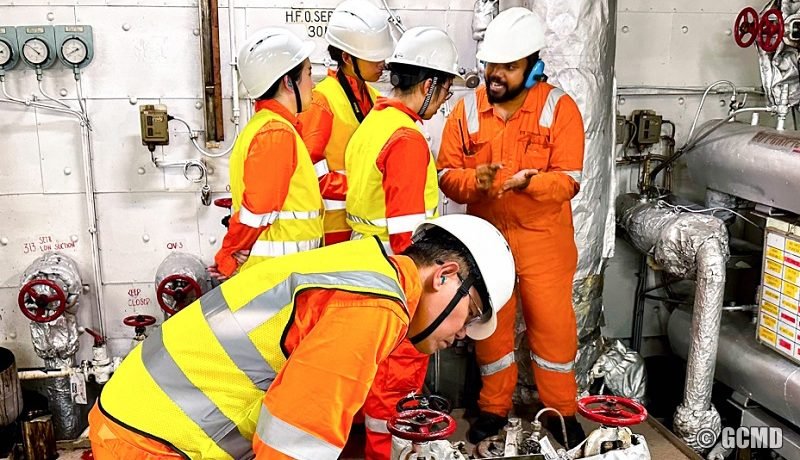
Singapore / Tokyo, 18 September 2025 – The Global Centre for Maritime Decarbonisation (GCMD) has released the full report for Project LOTUS (Long-Term impact of continuous use of biofuels on vessel operations), marking a major milestone in the global push toward maritime decarbonisation.
Launched on 9 May 2024 in partnership with NYK Line, one of the world’s leading shipping companies, the six-month pilot trialled the continuous use of a B24 biofuel blend onboard a pure car and truck carrier (PCTC). The fuel blend consisted of 24% fatty acid methyl ester (FAME), also known as biodiesel, mixed with very low sulphur fuel oil (VLSFO).
The goal: to assess the real-world, long-term operational impacts of biofuels on marine engine performance and shipboard fuel systems.
Table of Contents
Filling a Critical Data Gap in Biofuel Operations
While biofuels are increasingly seen as a viable near-term solution for reducing shipping’s greenhouse gas emissions, there has been limited data on their long-term impact on engines and onboard systems. Project LOTUS directly addresses this gap.
By implementing a comprehensive, structured monitoring framework, the trial measured fuel and lubricant quality at key sampling points and conducted in-depth inspections of fuel delivery systems and engine components.
“Project LOTUS grounds the conversation around the extended use of biofuels in evidence,” said Professor Lynn Loo, CEO of GCMD. “Our findings show that they can be deployed safely and reliably, providing a concrete pathway for shipping’s decarbonisation.”
Robust Testing in Real-World Conditions
The trial encompassed:
- 94 fuel and 91 lubricating oil laboratory tests
- Continuous B24 usage for 2,888 hours on the main engine and 1,813 hours on generator engines
- Full inspections during the vessel’s post-trial dry docking
Key findings:
- No operational degradation: The engines operated comparably to when powered by conventional VLSFO.
- No excessive wear: Fuel injection valves, pump plungers, liners, and pistons remained within OEM specifications.
- No sludge or microbial growth: Even with a 2.5x increase in the acid value of stored B24 biofuel blend over six months, fuel quality remained within ISO 8217 standards.
- Full compatibility: OEMs confirmed that long-term B24 usage poses no adverse effects, provided proper maintenance and fuel handling protocols are observed.
Pragmatic Approaches Emerging in Industry
As part of the project, GCMD also surveyed vessel operators currently using biofuels to compare real-world practices with technical guidance from classification societies and OEMs.
The findings reveal a trend toward practical, risk-based adoption strategies. Many operators are successfully adapting existing standard operating procedures (SOPs) for VLSFO to biodiesel use, aligning with technical recommendations where feasible.
This points to a broader industry shift: As biofuels become more mainstream, classification societies, OEMs, and ship operators must collaborate to balance safety standards with operational realities.
Supporting Decarbonisation Through a Monitoring Framework
A key deliverable of Project LOTUS is a publicly available structured monitoring framework to help shipowners and operators track biodiesel performance systematically and detect anomalies early.
The customised data log template, derived from conventional engine logbooks, has been proven effective during the trial and is now accessible for industry-wide adoption. It can be tailored to various vessel setups and operational requirements.
Strategic Importance in a Carbon-Constrained Future
The results from Project LOTUS gain added significance in light of the IMO’s net-zero emissions framework and the upcoming Greenhouse Gas Fuel Intensity (GFI) targets. Biofuels, especially drop-in blends like B24, present a near-term opportunity for shipowners to:
- Meet compliance requirements
- Reduce GHG penalties
- Generate surplus carbon units for future trading
“The use of biofuels is one of the key options for advancing the sustainable development of the maritime industry,” said Nobuhiro Kashima, Senior Managing Executive Officer of NYK Line. “We hope that the outcomes of this project will offer new possibilities to those considering the adoption of biofuels and help accelerate their broader use in various fields.”
Download the full Project LOTUS Report here
About the Global Centre for Maritime Decarbonisation (GCMD)
Established on 1 August 2021, the Global Centre for Maritime Decarbonisation is a non-profit organisation dedicated to accelerating the shipping industry’s transition to a low-carbon future. Headquartered in Singapore, the world’s largest bunkering hub and busiest transshipment port, GCMD serves as a key enabler for the development and deployment of scalable decarbonisation solutions.
GCMD was founded by six industry leaders — BHP, BW Group, Eastern Pacific Shipping, Foundation Det Norske Veritas, Ocean Network Express, and Seatrium — and is supported by the Maritime and Port Authority of Singapore (MPA). Strategic partners include bp, Hanwha Ocean, Hapag-Lloyd, NYK Line, and PSA International, with over 130 partners contributing funding, expertise, and in-kind support.
To date, GCMD has launched initiatives addressing:
- Ammonia fuel deployment
- Drop-in green fuel assurance
- Onboard carbon capture and value chain articulation
- Closing the data-financing gap for energy efficiency technologies
By shaping standards, de-risking innovation, and fostering collaboration, GCMD is paving the way for a commercially viable and environmentally sustainable maritime industry.
Source Global Centre for Maritime Decarbonisation (GCMD)