
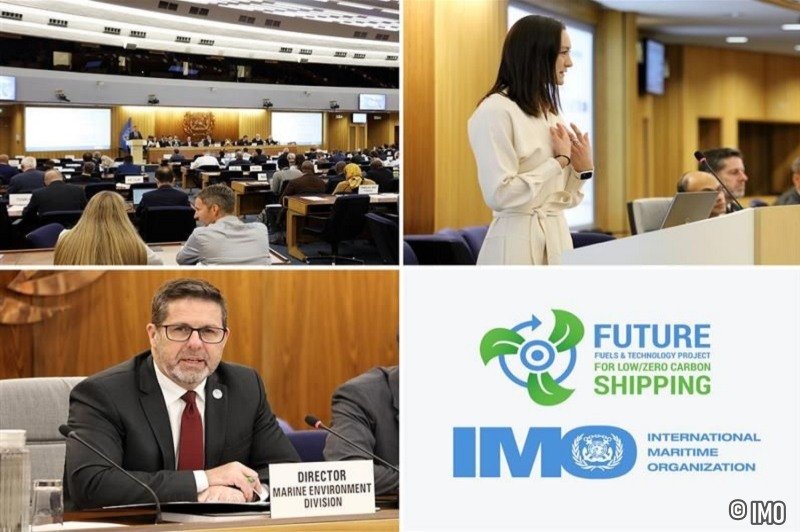
London, United Kingdom | September 2025 – the International Maritime Organization (IMO) has positioned Onboard Carbon Capture and Storage (OCCS) as a critical “bridge technology.” As the maritime industry faces intensifying pressure to meet net-zero targets,
During a high-level technical seminar held at IMO Headquarters on September 11, under the Future Fuels and Technology Project, experts and regulators gathered to map out the operational, safety, and regulatory future of capturing CO₂ at sea.
The Mechanism: Capturing Emissions at the Source
OCCS adapts land-based Carbon Capture and Storage (CCS) for the unique constraints of a vessel. The process involves three distinct phases:
- Capture: CO₂ is intercepted from the ship’s exhaust gas before it enters the atmosphere.
- Storage: The captured CO₂ is liquefied or chemically stabilized (such as conversion into limestone) and stored in dedicated onboard tanks.
- Offloading: Once the vessel reaches port, the stored carbon is transferred to shore-side infrastructure for industrial utilization or permanent sequestration in sub-seabed geological formations.
“This seminar aims to improve understanding of the latest developments in OCCS technology and its role in decarbonizing international shipping,” stated Mr. David Osborn, the newly appointed Director of the IMO’s Marine Environment Division.
Key Operational Challenges & Innovations
The seminar, attended by over 400 international participants, moved beyond theory to address the practicalities of “the carbon value chain.” Industry leaders highlighted several critical areas:
- Infrastructure Readiness: The success of OCCS depends heavily on ports’ ability to receive and manage captured CO₂.
- The Human Element: Training crew members to manage high-pressure or cryogenic CO₂ storage systems is a primary safety concern.
- Alternative End-Uses: Innovations were showcased regarding the conversion of CO₂ into solid minerals (limestone), which simplifies storage and reduces the risks associated with pressurized gas.
- Interim Viability: Experts emphasized that OCCS serves as a vital interim measure while the global supply of carbon-neutral alternative fuels (like green ammonia or methanol) scales up to meet demand.
Closing the Regulatory Gap
A significant portion of the seminar focused on the “regulatory vacuum” currently surrounding carbon capture at sea. Mr. Roel Hoenders, IMO Head of Clean Air and Climate Action, confirmed that the organization is actively drafting a comprehensive framework.
Future IMO work will include:
- Standardized guidelines for the testing and survey of OCCS hardware.
- Certification protocols to ensure the technology meets environmental safety standards.
- Integration with the London Protocol, the only international treaty currently providing a legal framework for the safe injection of CO₂ into sub-seabed formations.
The Bottom Line for Bunkering & Shipping
While OCCS is not a “silver bullet,” it offers a pathway for existing fossil-fuel-reliant vessels to significantly reduce their carbon footprint without immediate, costly engine retrofits for alternative fuels. However, the industry consensus remains clear: Collaboration is mandatory. The technology requires a synchronized effort between shipowners, port authorities, and carbon-sequestration providers to be commercially viable.
For stakeholders looking to dive deeper into the technical data, the IMO has made the full suite of presentations and event recordings available via the Future Fuels and Technology portal.